
(Photo: Evan Christie)
Diamond Diplomacy by Yuriko Gamo Romer is an excellent documentary that showcases the way Japan and the United States have been drawn together by the game they share.
It explores how baseball uniquely fit Japanese cultural sensibilities more than other imported team sports like rugby or association football. The one-on-one clash that baseball provided mirrored traditional sports like sumo and kendo, making it more appealing to the Japanese than the chaos of other team sports.
It highlights the cultural differences that many players have found jarring when making the jump across the Pacific, both ways. The Japanese approach differs vastly from the American approach in terms of training, off-field activities, and on-field actions.
But it also highlights how the shared love for baseball has brought the two countries together at times when they were drifting apart. From the 1940s through the 1990s, when times get tough, sport often acts as a uniting force.
It also briefly covers the pioneers of the Japanese and Japanese American game. These include Kenichi Zenimura, Wally Yonamine, Masanori Murakami, Warren Cromartie, and Hideo Nomo, all legends who helped bring the two countries closer together.
It does all these things in an incredibly well-paced manner, with excellent visuals and an editing style that, while it tries to do a bit too much in some areas, nonetheless keeps the viewer engaged and makes the 84-minute runtime feel like a quarter of the length.
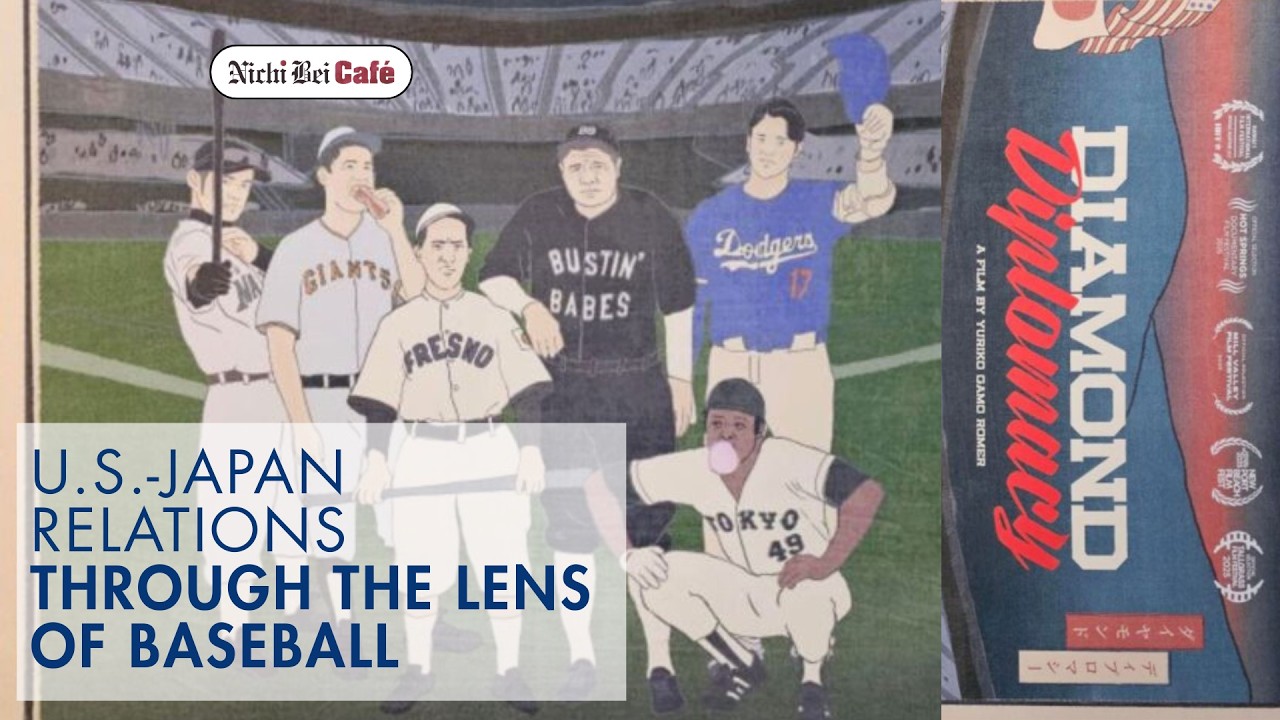
If I had one critique about the documentary, it’s that for a Japanese baseball nerd like myself, it all feels a little too surface level. Important points are often glossed over in a way that doesn’t necessarily pique the curiosity of the viewer or may leave the viewer with the wrong impression about certain events thanks to a lack of context.
Such things as the San Francisco Seals tour’s role in ensuring that Japanese professional baseball didn’t split forever, Bill Veeck’s role in early MLB-NPB relations, the struggles and triumphs of the early foreign players in Japan, how Yutaka Enatsu acted as a proof of concept for Don Nomura’s loophole, or how Hideo Nomo’s flight to MLB was actually triggered by a feud.
However, that can be chalked up to a limitation of the medium. The story is told more from the North American perspective than the Japanese one, and since that is the intended audience, one cannot fault Romer for going that way. I guess what I’m saying is there’s a lot more here to be told.
Nonetheless, I thoroughly recommend it to anyone looking for a gateway drug to Japanese baseball history.
JapanBall was invited to an advance screening of Diamond Diplomacy in Tokyo on October 23.
