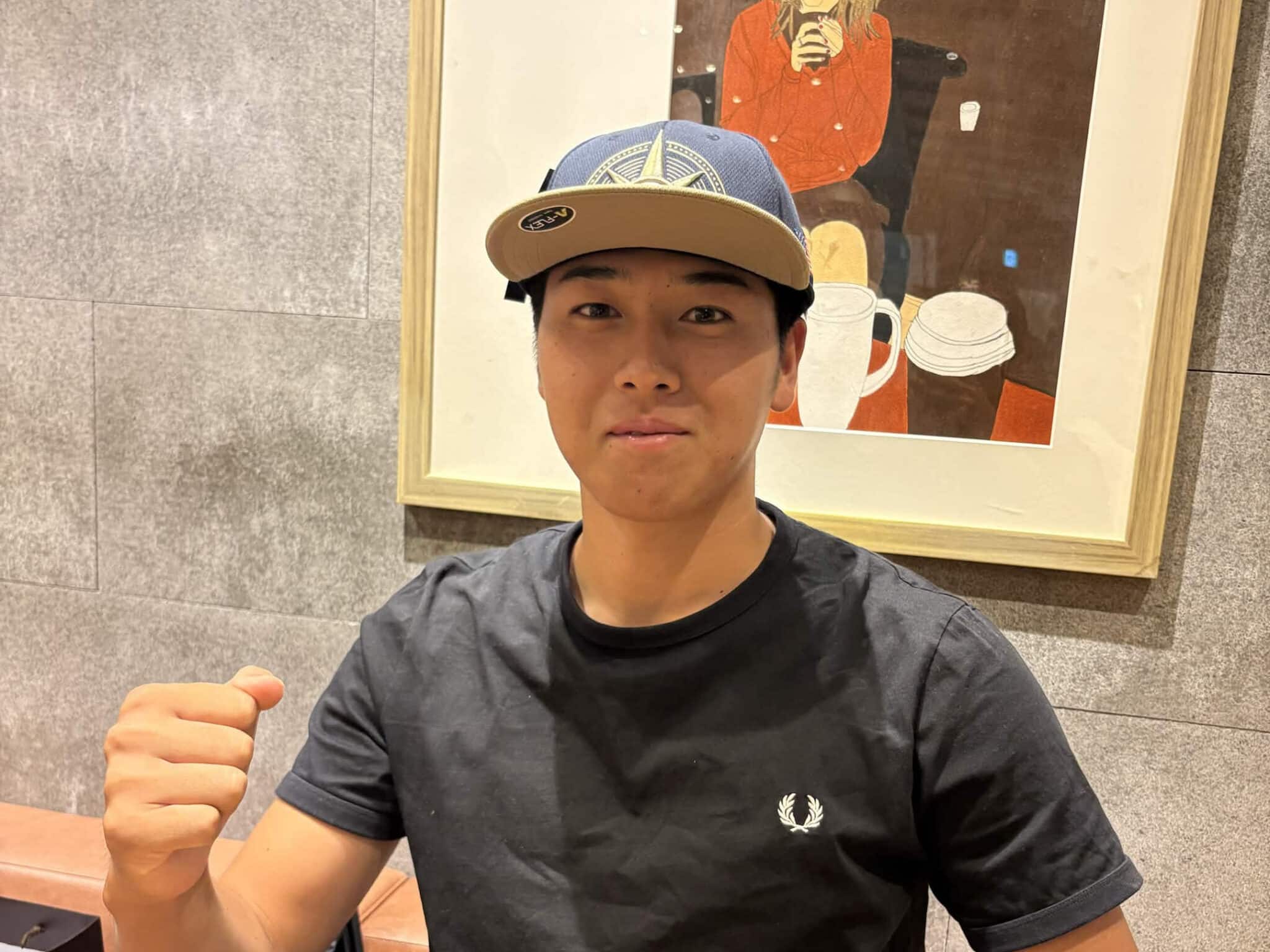
“Ore, Sanjo,” or “Here I come,” is one of Gaku Arima’s favorite phrases. It comes from the popular Japanese superhero series Kamen Rider, but for Arima, it also carries a message from his father.
In high school, the Nara native had a tendency to become too tense and serious on the mound. His father encouraged him to embrace the phrase as a reminder to loosen up, have fun, and pitch like himself. He has carried that mindset with him ever since.
These days, Arima’s mornings begin early at Kyoto’s Ritsumeikan University, where practice starts at 5:30 a.m. in an intense schedule that still reflects the old-school culture common across many Japanese baseball programs. The routine has helped turn the 5-foot-9, 170-pound southpaw into one of the top pitching prospects in the country, with Arima widely expected to hear his name called early in the 2026 NPB Draft.
Long before professional baseball became realistic, however, his biggest goal was to reach Koshien. Arima began playing baseball in first grade and grew up watching the Summer Koshien tournament every August. Like countless other Japanese kids, he was captivated by the country’s best high school teams playing at Hanshin Koshien Stadium and dreamed of one day reaching the same stage himself.
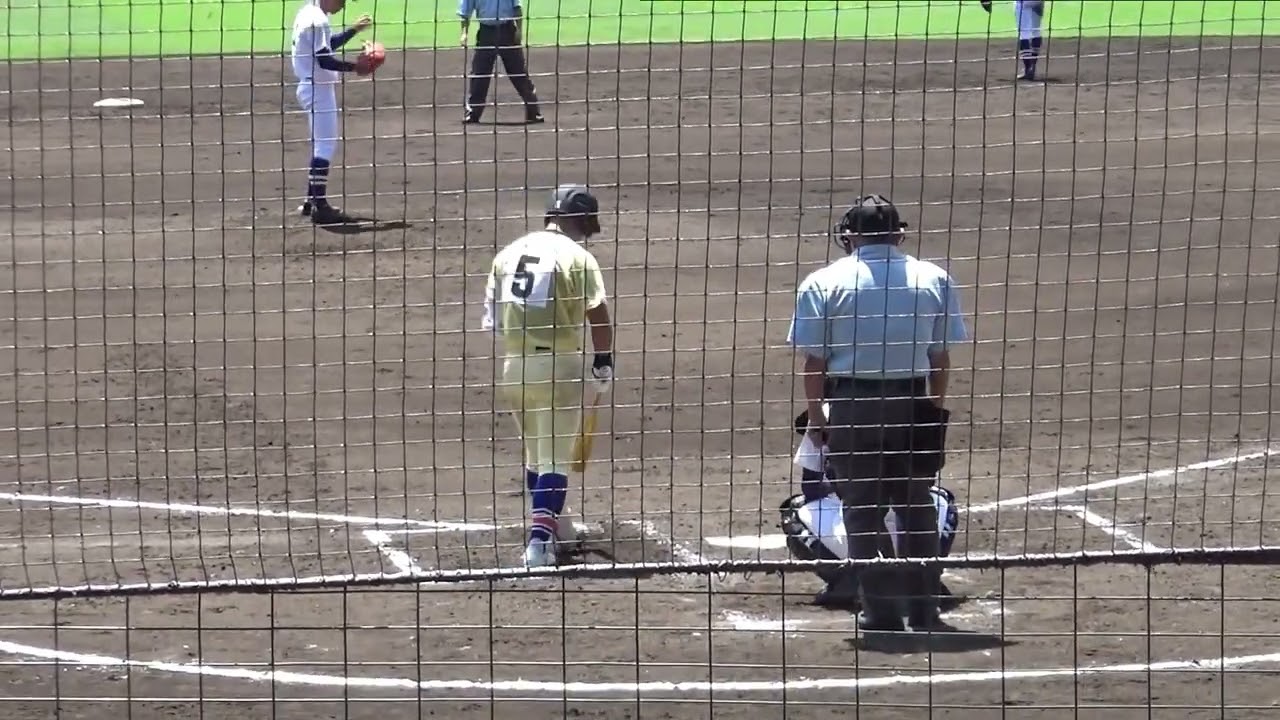
He accomplished that in 2022 as the ace of Aichi Institute of Technology Meiden, better known as Aikodaimeiden. Arima made four starts that tournament, helping his school reach the quarterfinals before falling to eventual champion Sendai Ikuei.
It was around that time that professional baseball also became a legitimate possibility in Arima’s mind. His velocity was improving rapidly, and he seriously considered declaring for the NPB Draft. However, he had watched former teammate Shunsuke Tamura struggle with the transition to NPB, and his father encouraged him to spend more time developing before turning pro.
Four years later, he enters his final collegiate season as one of the premier pitchers in the Japanese amateur scene. His fastball has touched 151 kmh, or 94 mph, and evaluators from all 12 NPB organizations have followed him closely, with MLB scouts also making appearances at his games.

His most notable performance came at the Meiji Jingu Baseball Tournament on November 14, 2025, when he struck out 10 consecutive batters to set a tournament record that had stood for 53 years.
“I was counting how many strikeouts I had in my head, but didn’t realize it was a record until afterward,” Arima told me.
Despite posting an excellent 2.32 ERA across 237 collegiate innings, he still sees plenty of room for improvement. Ritsumeikan utilizes Rapsodo, and Arima checks basic measurements such as spin rate and induced vertical break, but admits he is not yet familiar with the finer details of the data. Much of his pitching development still comes from feel, particularly in his mechanics and delivery.
One of his biggest priorities is keeping himself from flying open too early. When his arm slot begins to drop, his command tends to deteriorate, so he tries to maintain a more vertical feeling through release. He visualizes it like the hands of a clock: 11 o’clock is where he wants to be, while drifting toward 10:30 usually means something is off.
His arsenal includes a two-seamer thrown with more of a splitter grip, along with two variations of a slider. The slider is his best weapon, with the slower, sweepier version designed to steal strikes earlier in counts, while the harder one serves as a putaway pitch.

One of the more unusual aspects of his profile is that he feels more comfortable facing right-handed hitters than lefties. For a southpaw, the opposite would normally be expected, but Arima has had difficulty consistently throwing strikes inside to left-handed hitters and attacking that part of the plate.
It is one of the several areas he hopes to improve before making the jump to professional baseball, and he has taken plenty of inspiration from pitchers already succeeding at the highest level.
“I want to become a pitcher like Yoshinobu Yamamoto who stars in the World Series,” he says. “I enjoy studying his pitching and would really like to throw a curveball like him.”
Arima regularly watches Yamamoto’s game and has also borrowed ideas from some of his training methods, including breathing exercises using a straw. More recently, he has spent some time watching videos of fellow Dodgers starter Tarik Skubal to gauge the mechanics of an elite power lefty.
Among pitchers Arima has seen in person, former Kansai University standout Yumeto Kanemaru (now with the Chunichi Dragons) left the strongest impression. Arima was especially struck by Kanemaru’s command and ability to use his entire repertoire effectively, something he hopes to improve in his own game.
That kind of consistency is particularly important in the Kansai Big 6 League, where the schedule can put a heavy burden on pitchers. Teams play series until one side earns two wins, meaning an ace of a staff could start on Saturday and return on Monday on only one day of rest if the first two games are split. Plus, bullpen work still has to fit between series, creating highly demanding workloads over the course of a season.
Arima has experienced that firsthand, with weeks when he estimates he threw close to 400 pitches. This spring, he even pitched into the 11th inning against Doshisha University before eventually losing on a walk-off home run.
Arima emphasizes simple things like running, punching bag training, and general conditioning during the offseason to prepare his body for the demands of the season. Recovery is also an important part of the routine, and Arima is particularly fond of using the sauna whenever he can. He has also drawn on the experience of former Major League pitcher Shigetoshi Hasegawa, a Ritsumeikan alumnus who has offered advice as Arima inches closer to the professional level.
Last summer, Arima had a chance to measure himself against another group of high-level players when he represented Japan in the Collegiate All-Star Series against Team USA. Japan swept the five-game series on home soil, and for Arima, the biggest takeaway was successfully competing against some of the best prospects in American baseball.
“To be completely honest, I didn’t feel that big of a gap in our abilities,” Arima said of facing players such as Roch Cholowsky, Vahn Lackey, and Drew Burress. “I gave up a run, but held Cholowsky to a groundout.” The experience gave him confidence that he could eventually compete at the Major League level.
The series also gave him an opportunity to befriend other players. During an off-field team exchange, he was seated at the same table as Oregon State flamethrower Dax Whitney, and the two ended up exchanging Instagram accounts.
Arima also came away particularly impressed by the communication skills and all-around receiving of Aoyama Gakuin University catcher Kai Watabe, who formed a battery with him.
“I realized that he’s the kind of player who can reach the pinnacle,” Arima said.
For Arima, however, the draft remains a major source of uncertainty. Despite all the scouting attention surrounding him, he has little idea which teams are most seriously considering him, where he might ultimately land, or even whether he will be selected at all.
Before the draft in October, he wants to increase his maximum velocity to 155 kmh, or about 96 mph. Once he turns professional, he hopes to immediately compete for a spot in the starting rotation as a rookie, though he understands the initial adjustment will be difficult.
He already has some potential matchups in mind. Yuki Yanagita and Kensuke Kondoh are among the hitters he most wants to face, giving him an opportunity to test his arsenal against some of the most accomplished batters in Japanese baseball.
His goals extend beyond NPB as well. After representing Japan at the collegiate level, Arima wants to make the senior Samurai Japan roster and hopes to play in either the next World Baseball Classic or the one after it, ideally alongside Shohei Ohtani.
For now, Arima still has one final season at Ritsumeikan before finding out where his professional career will begin. Koshien was once his biggest goal in life, and he reached it. Four years later, he enters the 2026 Draft as one of the top amateur pitchers in Japan, with his next stage in baseball now just months away.
“Ore, Sanjo,” indeed.
