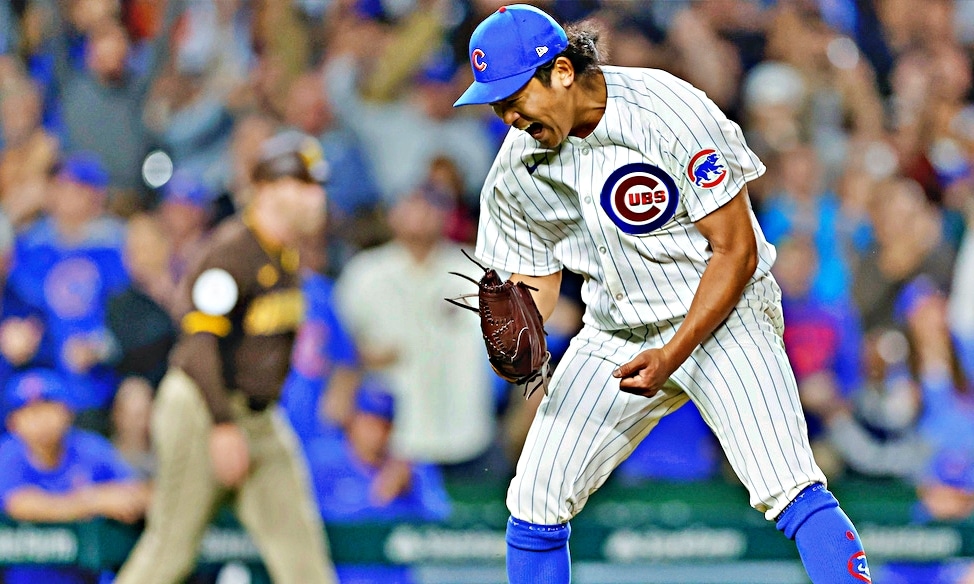
Shota Imanaga of the Chicago Cubs continued his string of good performances in August and was a highlight among the Japanese imports in Major League Baseball, along with fellow starting pitcher Yoshinobu Yamamoto and two-way megastar Shohei Ohtani of the Los Angeles Dodgers.
Imanaga was 0-2 in five August starts, losing to St. Louis and Milwaukee, but he posted a 2.65 ERA and opposing batters averaged just .154 against him. He allowed just 18 hits and five bases on balls, while striking out 32, in 34 innings. In addition, he was an innings eater, going seven innings in three games and pitching into the seventh inning of the other two.

Since returning from the injured list on June 26, Imanaga has had a 3.24 ERA in 72 1/3 innings. For the season, he is 8-6 with a 3.08 earned-run mark and an excellent 0.93 WHIP.
His barrel rate, average exit velocity, launch angle, and hard-hit rate against opposing batters have increased this year. On the other hand, his walk rate had been much higher earlier in the season but is now 1.69 per nine innings, not far off the 1.5/9 mark of a year ago. Also, opponents’ batting average on balls in play is just .210, compared to .264 a season ago.
Yamamoto had four quality outings out of five starts in August and pitched into the sixth inning or later in all but one of the starts. The only tough time he had was against the Los Angeles Angels on August 11 when he gave up five walks and six earned runs in 4.2 innings.
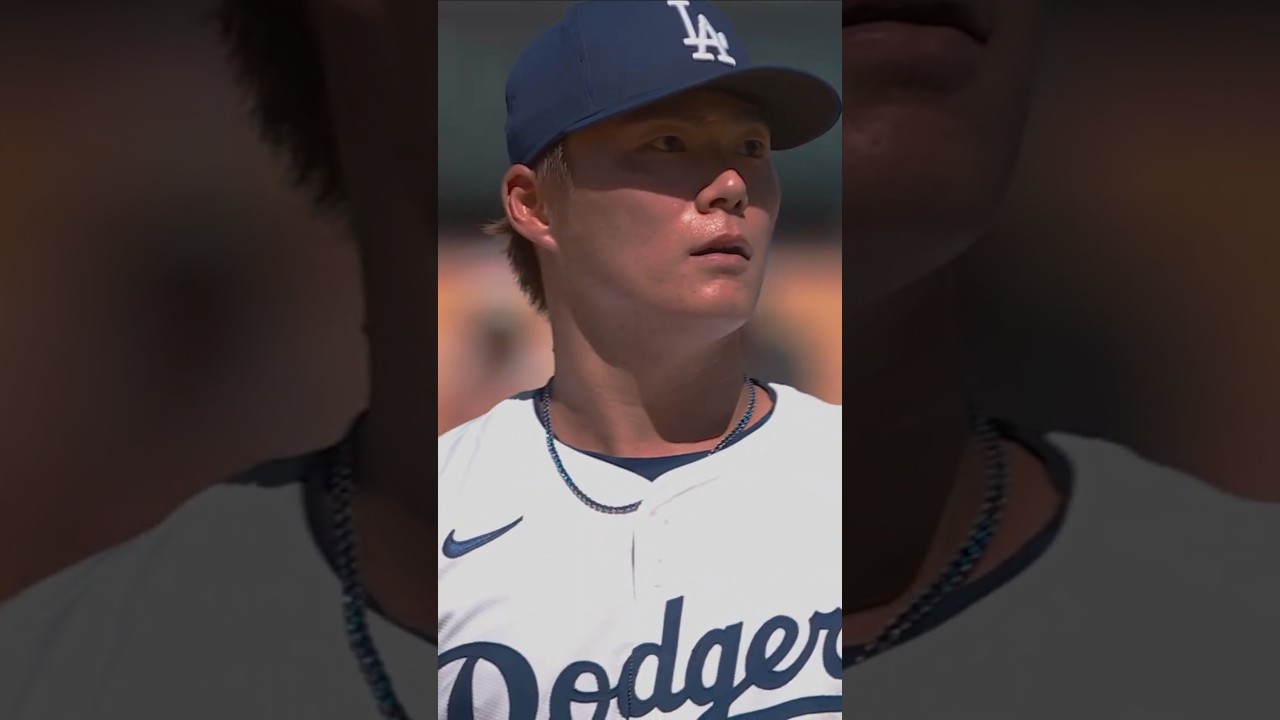
For the month, he was 2-1 with a 4.24 ERA and 1.20 WHIP. Overall, he is 11-8 with a 2.82 earned-run mark and 1.05 WHIP.
His splitter remains his most effective pitch, with batters averaging just .150 against it with a .493 OPS. He has thrown the splitter and four-seam fastball 63 percent of the time, and hitters are averaging a combined .176 against them. His barrel rate and hard-hit rate are lower than in 2024.
Despite his success, Yamamoto can still improve. In particular, Dodgers manager Dave Roberts wants to see him be more aggressive in attacking the strike zone.
“I think Yoshi’s got to continue to get strike one,” Roberts answered when asked what Yamamoto needs to do in order to be dominant like Pedro Martinez and Tim Lincecum, two pitchers with similar builds.
Ohtani had his second-best month of the season as a hitter, averaging .306 with seven home runs, 12 RBIs, and a 1.020 OPS. As a pitcher, he was 1-1 with a 5.71 ERA in four starts covering 17.1 innings. The damage came in his August 13 and August 20 outings, in which he allowed 14 hits and nine earned runs in 8.1 innings.
His longest outing was against Cincinnati on August 27 when he went five innings for the first time this season and gave up just a run on two hits. For the season, Ohtani is 1-1 with a 4.18 ERA and 1.21 WHIP. He has struck out 44 batters and walked seven in 32.1 innings.
An interesting article delves into how Ohtani is a different type of pitcher this season, as he makes a comeback from his second Tommy John surgery. In essence, the story says his fastball velocity is up, he’s not using his splitter nearly as much, and he’s using his slider more and to a positive effect.
As a designated hitter, Ohtani is averaging .276 with a .986 OPS. He has 45 home runs – third in MLB behind Seattle’s Cal Raleigh (50) and Philadelphia’s Kyle Schwarber (49) – and 85 RBIs.
On August 6 against St. Louis, Ohtani homered for the 1000th hit of his MLB career. Only three Japanese-born players have reached 1,000 hits in MLB, with Ichiro Suzuki (3,089) and Hideki Matsui (1,253) being the others.
An amusing aside: After Ohtani hit his 45th home run against San Diego on August 24 and before he returned to the dugout, he high-fived a Padres fan who had been heckling him the entire game.

In addition, there are nine other Japanese imports on MLB teams at the moment. Here is a closer look at how each did in August.
Tomoyuki Sugano
Until his final start of August, when he gave up 10 hits and seven earned runs in 3.1 innings against San Francisco, Sugano had gone 2-1 with a 2.86 ERA in five starts covering 28.1 innings. He allowed 24 hits and six walks during that span.
Actually, he had begun his rebound with his final start of July against Colorado when he gave up just one run and four hits in six innings, and he carried that through almost all of August.

“[I] made some adjustments in the training,” Sugano said, “but usually every summer my feeling gets better, so I think that’s where it’s coming from.
The splitter, thrown 24 percent of the time, has been the most effective of his six pitches. Opposing batters are averaging just .211 with a .532 OPS against it. His second-most used pitch is the four-seamer, and that has been less impactful – a .281 opponents’ batting average and .528 slugging percentage. Opponents have also adjusted to his sinker (thrown 14.7 percent of the time), averaging .303 against it.
For the season, Sugano stands 10-7 with a 4.41 earned-run mark and 1.32 WHIP.
Yu Darvish
Darvish, now 39, finally got back on the mound on July 7 after dealing with an elbow problem since spring training. While he’s had some good efforts, his overall performance has been spotty.
He made five starts in August, two of which were solid. He allowed four hits and one run against San Francisco on August 11 and just one run and one hit to the Dodgers on August 22. However, he gave up 11 earned runs in his other three starts, covering 12 innings. Combined, he was 2-1 in the month with a 4.88 ERA – still better than when he first returned from the injured list.

After pitching to a 9.18 ERA in his first four starts, the routine-oriented veteran made what he described as a “drastic” change by lowering his arm angle. It was 40 degrees before and now 28, according to Statcast.
“From a higher slot, you’re going to create more north-south pitches. From (a lower) slot, you’re going to create more east-west pitches,” Padres pitching coach Ruben Niebla said. “His ability to still maintain eight different looks, nine different looks, is really impressive.”
Darvish’s slider, his most-used pitch (25 percent of the time), has been surprisingly ineffective thus far, as hitters are averaging .340 against it with a 1.096 OPS. Over his MLB career, though, the corresponding figures are just .208 and .620.
Batters are averaging just .143 and .129 off his second- and third-most used pitches, the sinker and curveball.
For the season, Darvish is 3-4 with a 5.66 ERA and 1.11 WHIP.
Kodai Senga
Senga has not had an easy time since returning to action on July 11 after a stint on the Injured List because of a strained hamstring in his right leg.

He pitched a scoreless four innings in his July 11 return, but since has allowed 24 runs (21 earned) in 30 innings. In those 30 innings he has given up 32 hits and 20 bases on balls, while striking out 23 batters. In August alone, Senga pitched to an 0-3 mark, 6.18 ERA, and 1.63 WHIP. His longest outing was 5.2 innings, and he failed to go five innings in four of his six August starts.
In contrast, from the beginning of the season through his July 11 start, he had a 1.39 earned-run average and 1.13 WHIP.
Following Senga’s August 26 no-decision against Philadelphia, Mets manager Carlos Mendoza said, “I’m going to be honest, performance matters. We’re to a point now where we’ve got to see performance, and that was a conversation with him. We need him because he’s an ace; we’ve seen it in the past, but we haven’t been able to get that consistency.”
Reportedly, Senga’s four-seam fastball, which he has thrown 31 percent of the time, has been less effective than in the past, as opponents have a higher slugging percentage and are making more consistent contact against it. While his ghost fork remains very effective – a .133 batting average against – his struggles with a less efficient fastball affect his ability to set up other pitches. In 2023 (he only pitched in one regular-season game last season because of injuries), opponents slugged .397 against the four-seamer. Through his August 26 start, the corresponding figure for 2025 was .545.
Seiya Suzuki
Suzuki’s average had trended steadily downward this season – he batted .321 in April, .259 in May, .226 in June, and .220 in July – and it looked as if August would be another down month before he got five hits in his final 12 at bats to end at .236 for the month. He hit just one home run and drove in only eight runs in August, though, and has batted just .203 since the All-Star break.

Part of this could be simply bad luck, as he has batted just .288 on balls in play, compared to a .370 mark last season. In addition, Suzuki has increased his slugging percentage and isolated power numbers compared to his three previous MLB campaigns, while his strikeout rate has decreased.
For the season, he is averaging .247 with 27 home runs, 89 RBIs, and an .803 OPS.
“The pitches that he’s had to drive he’s either missed [or] kind of fouled back, and he’s hit some like the line drive with the bases loaded the other day . . . and it just creates a sac fly and one run,” Chicago manager Craig Counsell said. “But I think he’s missed some pitches that are probably the home runs he hit earlier in the season. And you don’t get many of those pitches. And when you don’t do something with those, then you’re kind of battling for a single.”
Masataka Yoshida
Yoshida finally returned to action in early July following a slow recovery from off-season labral repair of his right shoulder.
He averaged just .239 in July and failed to improve in August when he got just two hits in his last 17 at bats and finished the month with a .214 mark and .596 OPS.
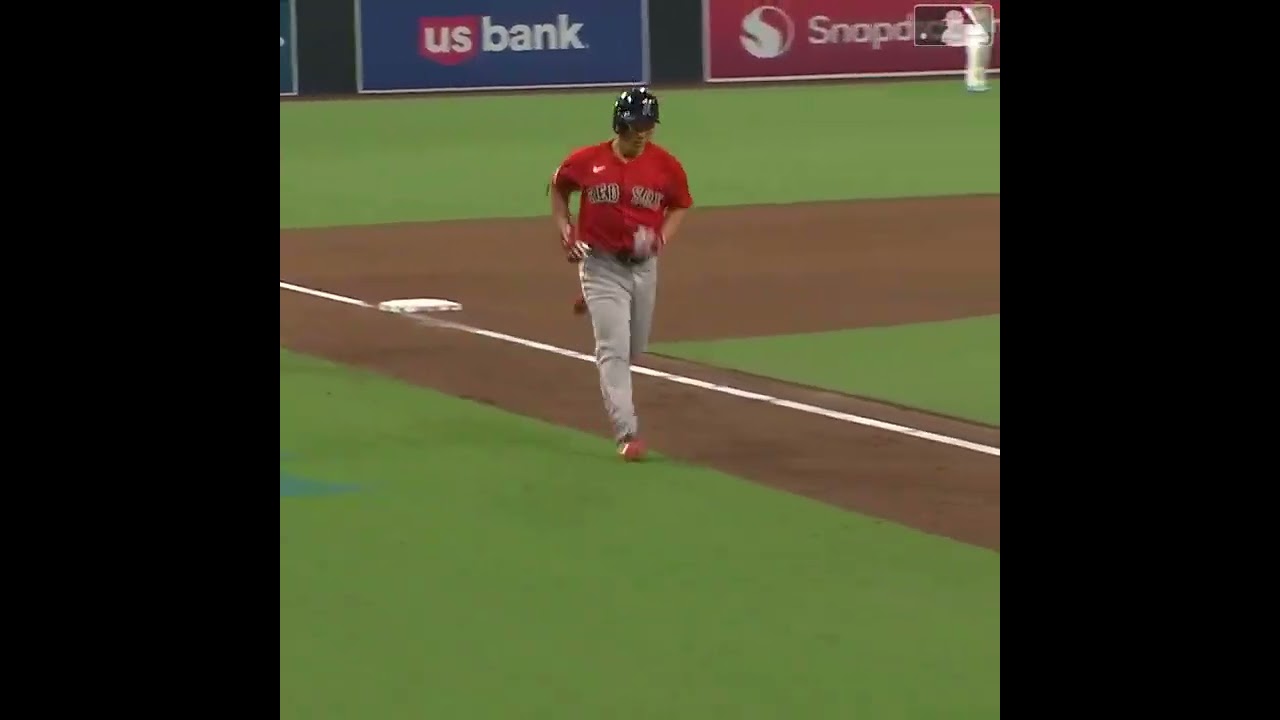
Red Sox manager Alex Cora said Yoshida has been “grinding” with hitting coach Pete Fatse the past few weeks.
“I think it’s just mechanics. Just timing, load, everything,” Cora said. “But the cool thing about him is that he’s still a good at bat. We trust the guy that he’s going to put together a good at bat, and we’re going to keep playing him.”
Yoshida continues to primarily be a designated hitter rather than an outfielder, playing that role in all but four games in August.
Yusei Kikuchi
Kikuchi began August with a six-inning stint in a win over Tampa Bay in which he gave up just four hits and a run. He later got a no-decision against Cincinnati after giving up just one run in seven innings. In his other three starts, though, he gave up 17 hits, eight walks, and 14 earned runs in 13 innings.

For the month, Kikuchi was 2-2 with a 5.54 ERA. Overall, he is 6-9 with a 3.68 earned-run mark and 1.43 WHIP.
He has had intermittent issues with command throughout his MLB career, and that has been the case this season. After averaging a career-low 2.25 walks per nine innings in 2024, he has averaged 3.74 per nine this year. That would be the highest of his career, not counting the 2020 season that was abbreviated by Covid-19.
Yuki Matsui
Matsui, used primarily in low-leverage situations by the Padres, has had a difficult time in June and July but settled down some in August, posting a 3.60 ERA in 12 outings (12 innings).

For the season, his marks are 2-1 with a 4.45 earned-run average and 1.39 WHIP. Those compare to a 4-2/3.72/1.16 in his rookie year of 2024. Other marks – such as strikeout and walk rates, batting average against, hard-hit rate, and barrel rate – are also somewhat worse than those of a year ago.
Though he was a closer in Japan, he continues to be used primarily in setup situations and does not appear to be a candidate for the late-inning mix unless the bullpen gets hit with a run of injuries.
Roki Sasaki
Sasaki has not pitched in a game since May 9 because of a right shoulder impingement and has been on the injured list since May 14, but he’s been on a rehab assignment.
In his third rehab start for AAA Oklahoma City, Sasaki averaged 96.4 mph on his four-seam fastball and topped out at 98.8, an improvement over his previous start. The 23-year-old struck out four, walked two and allowed three earned runs on five hits across 3 2/3 innings.
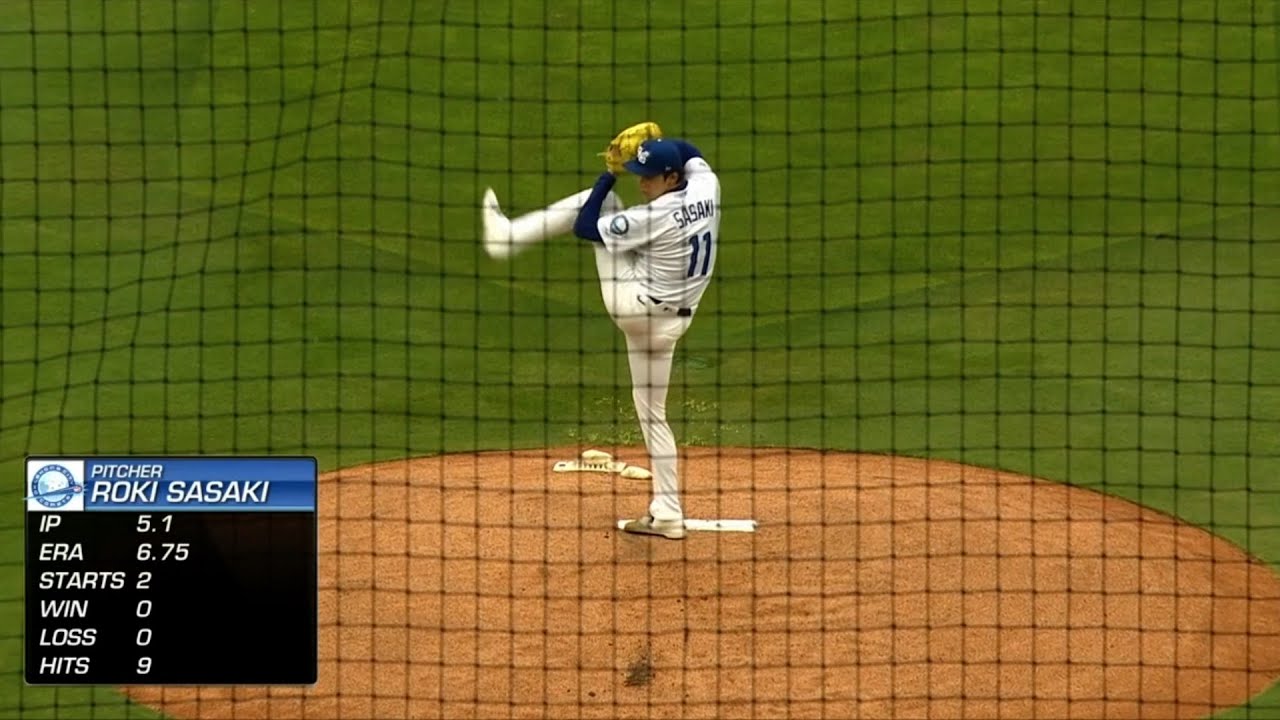
Sasaki is expected to need at least one additional rehab start before he could potentially return to the big league club.
“I think that he’s not quite there yet, but he’s getting there,” Roberts said before Sasaki’s third outing. “And again, there’s nothing more confidence-building than performance.”
Sasaki, who came to MLB with high expectations, has a 1-1 record, 4.72 ERA, 6.17 Fielding Independent Pitching (FIP), and 1.49 WHIP with the Dodgers. He’s issued 22 bases on balls in 34.1 innings while striking out just 24. Opposing batters’ hard-hit rate is 43.8 percent.
Shinnosuke Ogasawara
Ogasawara, signed to a two-year deal with Washington in the off-season, made his MLB debut on July 6 but was returned to AAA Rochester after two difficult starts. He returned to the Nationals on August 2, though, and has gone 1-0 with a 4.15 ERA in 11 relief appearances. In two games, he gave up five earned runs in 4.2 innings combined but was effective otherwise.

NOTES: Micah Yonamine, grand-nephew of Wally Yonamine, currently is averaging .208 with three home runs and 11 RBIs in 104 plate appearances for the Nippon-Ham Fighters development club . . . Kenta Maeda has had a difficult season. Released by Detroit on May 7, he signed a Minor League contract with the Chicago Cubs on May 15. He went 3-4 with a 5.97 ERA (57.1IP, 54H, 39R/38ER, 25BB, 45K, 8HR) in 12 starts with AAA Iowa before being released on August 2. Two days later, he signed a minor league contract with the Yankees. In four starts with AAA Scranton/Wilkes-Barre, he has posted a 1-2 record with a 7.11 ERA . . . Female pitcher Ayami Sato of the Toronto Maple Leafs is 1-0 with a 14.04 ERA in 13 appearances (three starts). She has allowed 40 hits in 16.2 innings . . . 18-year-old Japanese two-way (pitcher/infielder) prospect Shotaro Morii, now with the Athletics’ team in the Arizona Complex (Rookie) League, has a slash line of .258/.399/.384 after 43 games. He’s hit three home runs and driven in 27 runs . . . Rintaro Sasaki, Japan’s all-time high school home run leader, played for Cotuit in the prestigious Cape Cod Baseball League and finished with a .107/.265/.352 slash line in 34 plate appearances . . . Itsuki Takemoto, who pitched in the Koshien tournament as a high-schooler with Chiben Wakayama High School and then went to the University of Hawaii, also played in the Cape Cod League – with Orleans – and finished 0-2 with a 4.05 ERA in five appearances (four starts) . . . Relief pitcher Koyo Aoyagi who signed a minor-league deal with the Philadelphia Phillies in the off-season, was released in late July and is back in Japan with the Yakult Swallows’ development team. He is 0-3 with an 8.16 ERA in four relief appearances . . . Shintaro Fujinami took a minor-league deal with an invitation to spring training from the Seattle Mariners, was released on July 18, and later signed with the Yokohama DeNa BayStars. He made four appearances with the club’s development team, and now is back with the big league club. In one relief outing, he pitched five innings and gave up just one run. He also has allowed just one base on balls, a significant departure from his recent performances.