Everyone has heard the old saying about life being a journey. It’s a phrase easily tossed out, often with a wry grin or shrug, and usually forgotten in the next moment.
But some journeys aren’t so easily dismissed. Dennis Kasumba’s is one of them.
His path so far has stretched from Africa to the United States and, most recently, to Japan, and to say that it has been replete with roadblocks and bumps in the road would be akin to saying that the Sahara Desert is kind of hot. Now a catcher with the Asahikawa Be:Stars of Japan’s independent Hokkaido Baseball League, the 22-year-old Ugandan has slogged through more adversity than most. To wit:
- His father disappeared during Uganda’s civil war
- His mother left him and two siblings on his grandmother’s doorstep when he was just two months old
- He was raised in extreme poverty
- At the age of 7, he helped dig a 45-meter hole for a toilet in a slum
- At 14, he went to work in a slaughterhouse to help support his family
- He earned perhaps a dollar per day by cleaning mud, manure, and urine from cow pens, while barefoot
- He sometimes tended a cow to earn a few cents to buy sugar for his grandmother’s tea
Yet he somehow became a baseball player, despite being from a country and continent not known for the game. To learn how, one has to dig deeper. His story is rooted partly in his own determination and partly in the help of three men in particular: Katsuhisa Tanaka, Paul Wafula, and Joshua Williams.
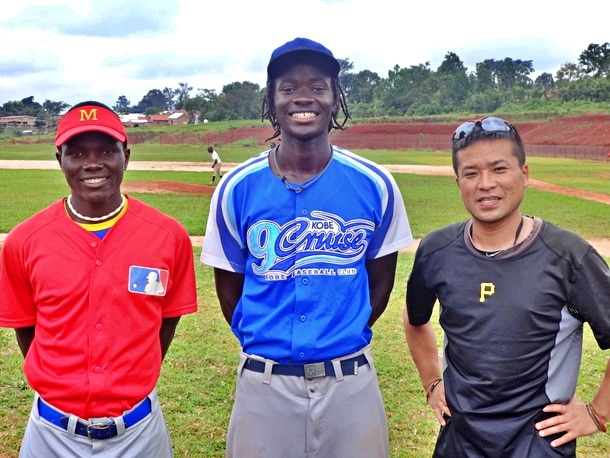
Tanaka began teaching baseball in Uganda in 2011 through the Japan International Cooperation Agency (JICA) and eventually helped coach the national team, which finished second at the 2019 Africa Cup Baseball Championship. He spent seven years in Uganda before returning to Japan, where he now coaches in the Japan Winter League and has been the conduit through which a number of Africans have played in Japan.
Tanaka has been bringing Ugandan prospects to the Japanese independent leagues since 2012, the first being Wafula, who played five seasons as a pitcher and outfielder for Hyogo, then known as the Blue Sanders, in the Kansai Independent League and now coaches in Uganda.
By the time he was 7, Kasumba began acting as the breadwinner for the family, forgoing school and leaving early in the morning in the capital city of Kampala to look for work and pay for breakfast.
“The earlier I woke up, the better a job I was able to find,” Kasumba recalled. “I always got out of bed at 5 a.m.”
A year or so later, while toiling in a meat processing plant, he was noticed by a coach who asked if he wanted to try baseball. The man, Sempa Johnbosco, said he could provide cash and food, so Kasumba accepted. Despite his physically demanding job, he managed to train along with a number of other youngsters who had lost parents to the civil war or AIDS.
After a few years, though, Kasumba had to quit baseball to work in a slaughterhouse.
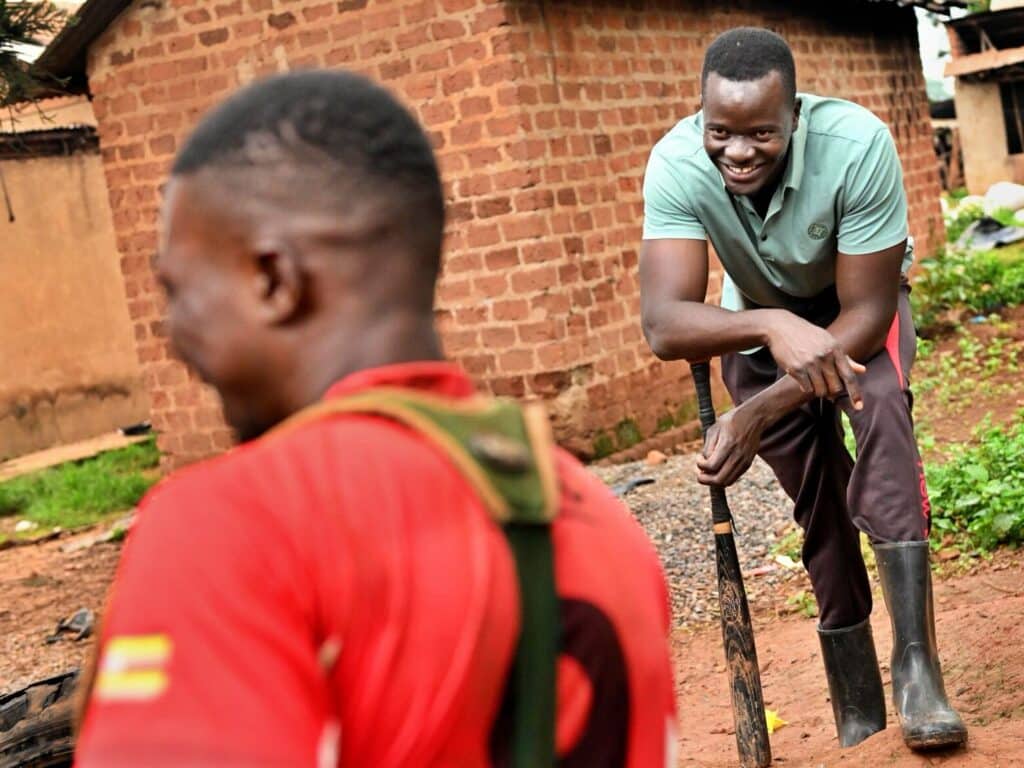
Photo: Wally Skalij – Los Angeles Times
“I had to take the job to help support my family,” Kasumba said. “I’m really the only person who can help my family be better off. But the coach [Wafula] told me he’d help me whenever I could come back.”
Over time, Kasumba saw more drug abuse around his workplace and decided he could “no longer stay here.” Wafula, now 31, asked why Kasumba was working in the slaughterhouse. He told him, “I want to have something to eat. We don’t have anything to eat at home.” Wafula understood. “I know how it feels. When I was younger, there were times I went without a meal. I know what it forces you to do.”
So Wafula, a volunteer coach, told Kasumba to leave the slaughterhouse, and he would be fed each time he came to the baseball field. He added that if Kasumba kept coming regularly, he would also pay for him to return to school.
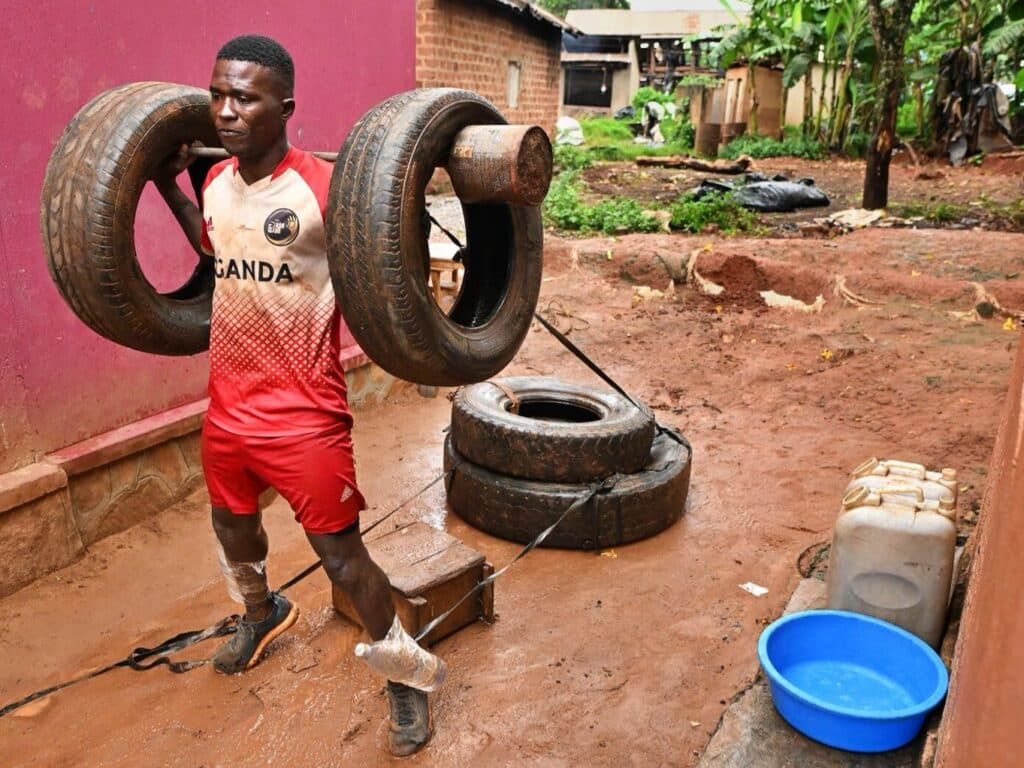
From that point, Kasumba began working to improve his skills, but he had no money to attend a gym. Aside from practicing with the team at a field often traversed by cattle looking for spots to graze, he used a small space on the side of his grandmother’s house, which is hidden down a narrow dirt road and filled with smells from nearby cow pens. He worked out using tires, bricks, plastic bottles, cans, soil, rocks, and whatever other free materials he could find.
Often working in wet, muddy conditions, he sometimes used stiff paper for gloves and trained with tires strapped to his back, plastic bottles filled with water, and an old backpack stuffed with rocks. He would work on his agility and balance by squatting for long periods of time on a cinder block. He was once seen hitting off a tee with a bat made from a tree branch.
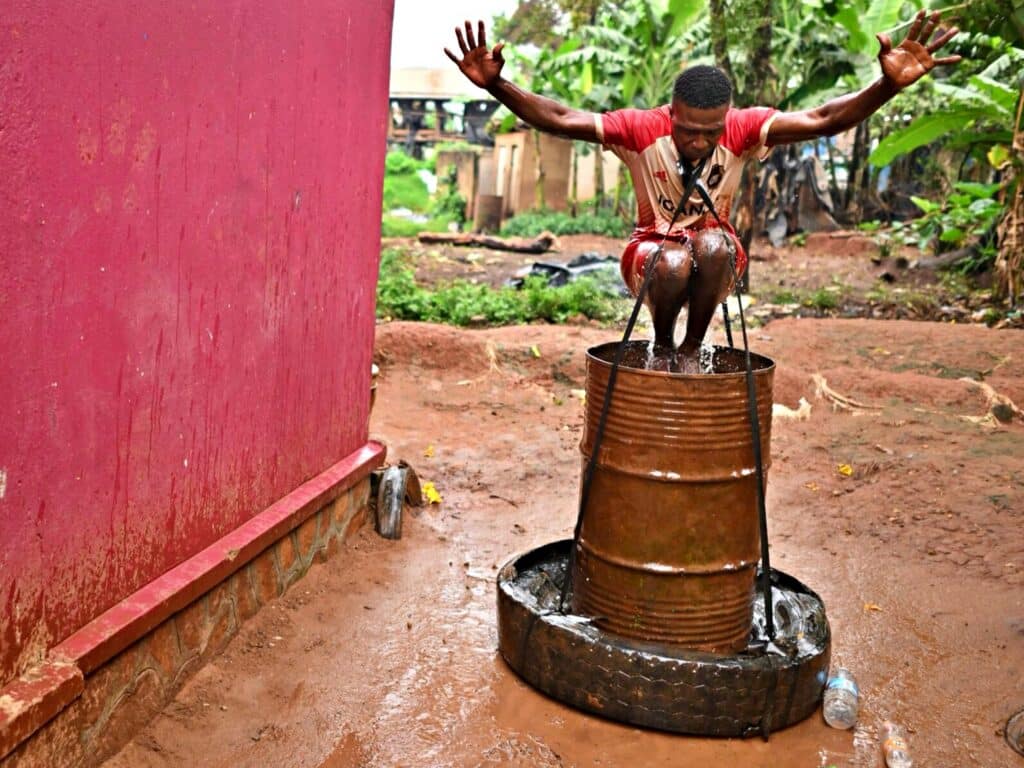
Photo: Wally Skalij – Los Angeles Times
For one workout, he put a 55-gallon barrel on an old tire and filled it with water. He would climb in, wrap elastic cords over each shoulder to create resistance and then leap out of the drum while raising his knees toward his chest.
He did four workouts a day and began posting videos of them on social media. The tactic worked: the posts went viral. In one, he repeatedly pops out of his catcher’s crouch and throws blocks instead of baseballs. In another, he’s weightlifting, using a bar with two tires attached.
After meeting Kasumba at the 2024 MLB All-Star Game, Kansas City Royals catcher Salvador Perez remarked, “All the sacrifices he’s made to try to be a professional baseball player — it’s something that people have to respect. When you think you’ve gone through some bad things, there are people worse off than us. When I feel tired and I remember him, it gives me more energy.”
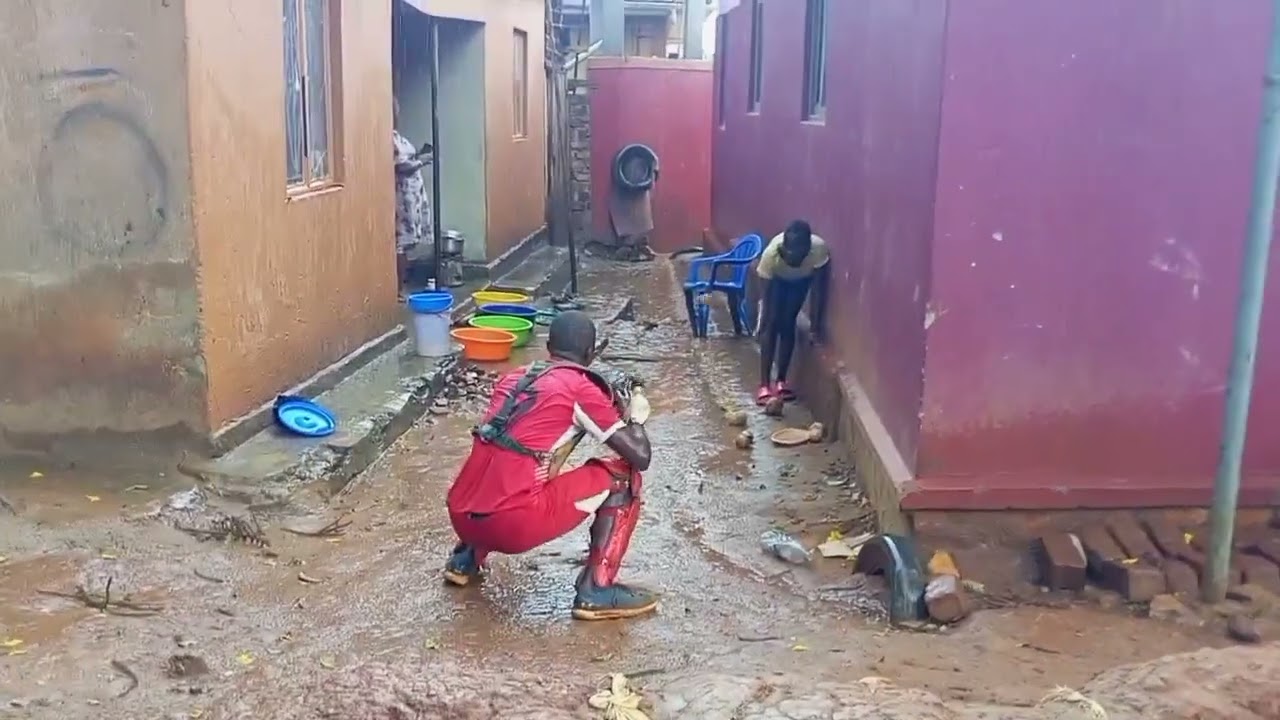
One video he uploaded when he was 14 even caught the eye of Los Angeles Dodgers superstar Shohei Ohtani, and Kasumba became one of only 240 people Ohtani followed on Instagram at the time.
Kasumba tried three times, without success, to get to the U.S. to further his career ambitions. An attorney in Atlanta, Joshua Williams, had seen one of his videos and tried to help. He said that a private high school in Florida had offered to let Kasumba finish his senior year of high school there and play ball, but his visa application was denied.
The ruling was based on the determination that Kasumba had insufficient family ties that would draw him back to Uganda. Of course, as an orphan, it wasn’t easy for him to document his family lineage.

Then he got a break. After the Los Angeles Times ran a lengthy story about him in 2023, he obtained a visa so that he could play in the MLB Draft League. The league’s first half features draft-eligible players aiming to improve their stock ahead of the annual MLB Draft. The league switches to a professional format in the second half, with paid players.
Kasumba, listed at 5 feet and 6 inches tall and 165 pounds (75 kg), played for the Frederick (Maryland) Keys and came back in 2024, as well. His experience was a good one, though he struggled against a much higher level of competition. Over the two seasons, he was 0-for-33 at the plate with 22 strikeouts. He also had issues defensively from time to time.
Rene Rivera, his manager at Frederick in 2023, said, “We have to understand that, pitching-wise, here and Africa are so much different, so it’s a process to adjust to the guy throwing 95, 96, 98. But catching-wise, he got a lot better — setup, catching the ball, catching 98 miles per hour fastballs.”
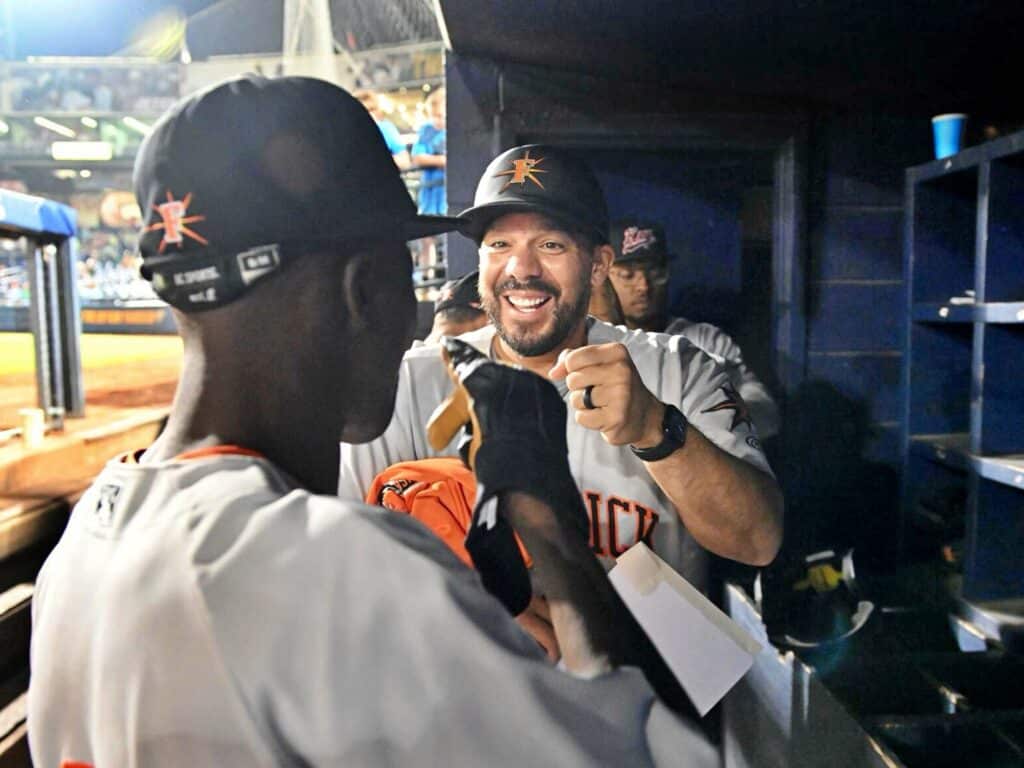
“I got experience that I couldn’t get in Uganda, and that’s the key,” Kasumba said. “I faced good pitchers, and I had good coaches. The Draft League wasn’t easy, but I wanted to get more skills, and I was able to do that.”
He also got another break after his second go-round in the MLB Draft League, thanks to Tanaka. The two had met back in 2014 when Tanaka was a volunteer coach through the JICA. This time, he offered Kasumba the chance to play with the Asahikawa Be:Stars of the independent Hokkaido Frontier League.
He’s part of a small but growing pipeline of Africans competing in the Japanese independent leagues.
In 2024, Ugandans Fred Kyazze, Allan Kabenge, and Isabirye Musa Azed — all pitchers — joined Kasumba on the Be:Stars, while Ugandan Kato Edrine pitched for the Hyogo Bravers of the Kansai Independent League.
This season, the Be:Stars also have Ugandan infielders Twaise Geiven and Bernard Eluk, Ugandan pitchers Morris Ogwal and Erick Ojara, and pitcher Dau John Wol Deng from South Sudan. The Be:Stars also signed Mouki Kora from Benin in early May, but he has yet to be placed on the roster. Edrine, 19, has moved on to the Tokushima Indigo Socks of the Shikoku Island League.
In addition, the Saitama Seibu Lions of Japan’s Nippon Professional Baseball (NPB) signed Azed and Kyazze after last season and will have them play this year for their developmental club Shinano in the Baseball Challenge League.
The Lions have a stated overseas strategy with the objective of strengthening the scouting, acquisition, and development of foreign players “who are expected to play an active role in the future in NPB.”
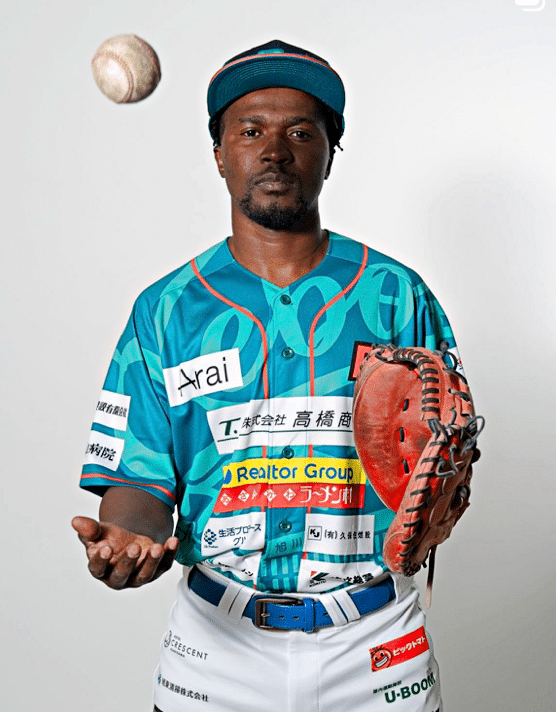
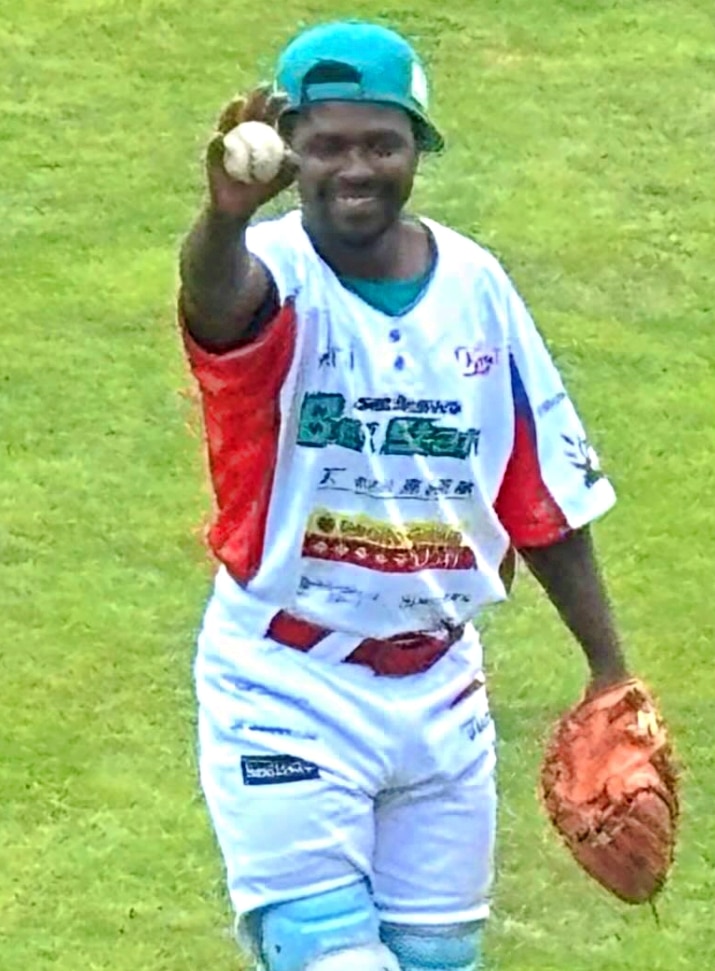
Tanaka, 49, said he recruited Kasumba after seeing him on social media and wanted to give him an opportunity to fulfill his potential. He was impressed by the youngster’s ability to stand out.
“Dennis was doing everything he could to train with different types of objects, but it was very difficult for him to survive in Uganda,” Tanaka said. “He has a lot to learn, but he got some solid basic training from his first season and is getting better. It’s going to take a while, but he’s very hardworking.”
Kasumba acknowledges that he needs further improvement, but he’s confident that he’s made strides.
“My dream is to be the best catcher, but I need to up my skills,” he said. “I like blocking, and my framing is good, but I need more work on my defense and my hitting. I haven’t played too much so far because of an ankle injury, but that’s getting better.”
Kasumba has remained in Japan during the off-season to continue training. Late last year, he played in the Japan Winter League. He isn’t paid a salary while with the Be:Stars, but the club pays for food and lodging, with all the foreign players housed in a dormitory. He is responsible for cleaning the bath, and he makes a point of thoroughly washing the floor and walls.

“Most of the players [with the Be:Stars] aren’t getting paid,” he said, “but getting experience here can lead to more opportunities.”
His next opportunity could be another go-round in the MLB Draft League.
“I’ve talked with the league president, and I’ll go back there next year,” he said. “My aim is to get into some showcases so I can be seen by scouts from other teams.”
And after that? Only time will tell. For him, the culmination of the dream would be earning enough to support his family in Uganda.
“If not for baseball, I think I’d be in the slaughterhouse again — and in the slaughterhouse, they use drugs, they use many things,” he said. “Some kids in Uganda go mad because of drugs.”
But, as Kasumba has said on social media, “I don’t let where I come from stop me from dreaming big.”