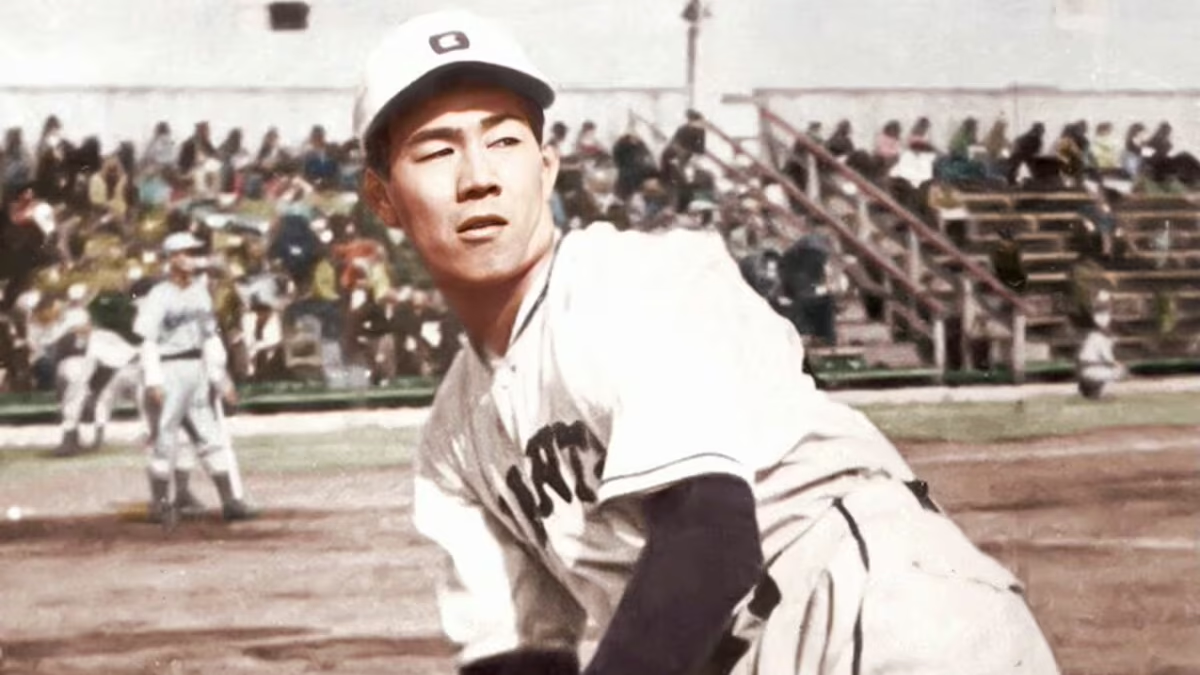
Every baseball fan knows the number 511. It is Cy Young’s career win total, and it has been unreachable since the day he retired in 1911. It is one of the most unbreakable records in history. Young pitched for 22 seasons, made 815 starts, and completed 749 of them. He was so thoroughly and so overwhelmingly dominant in pitching across two centuries that when baseball created an annual award for its best pitcher in 1956, the choice of whose name to put on it required no discussion at all.
It should come as no surprise that there is a similar award given out in Japan: the Eiji Sawamura Award. It works a little differently. It is given each year in Japan to the best starting pitcher in Nippon Professional Baseball, and it is named after a man who won 63 professional games in his career. Yes, sixty-three. 47 of them came before he turned twenty-one. He never came close to 511. He never really came close to 100. And he never came close to the career most people assumed was waiting for him. He was dead at twenty-seven years old, killed when an American submarine torpedoed his transport ship in the East China Sea in December 1944.
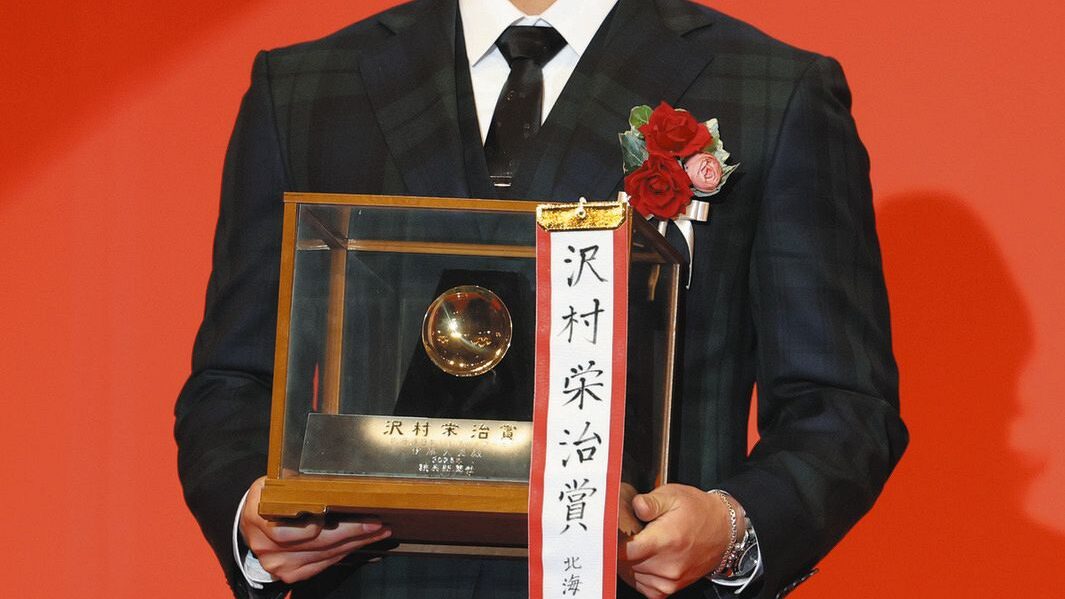
The award was created by the Yomiuri Newspaper, owner of the Yomiuri Giants, in 1947 to honor the achievements of Sawamura. It was almost a full decade before the creation of the Cy Young Award. The number 511 explains Cy Young’s career—the most pitching wins in history. Something else explains Eiji Sawamura’s legacy.
One of the greatest frustrations as a baseball fan is when a player on your team takes a bad swing. Not just any bad swing, but the kind of swing that looks like it is the first time they have ever swung a bat in their lives.
You know the kind. The pitcher throws a fastball, and when it arrives at the plate, the batter swings. And the swing is wrong, wrong in a way that makes the catcher’s mitt sound like a gunshot and leaves the batter standing there with a look on his face like a man who couldn’t believe what he just tried to do. The ball was right there. Only then it wasn’t, and the batter just looked like a fool.
Of course, it is a different feeling entirely if you’re a fan of the pitching team.
On November 20, 1934, at Kusanagi Stadium in Shizuoka, Japan, the sky was clear and Mount Fuji was visible over the outfield, its peak white against the blue. A seventeen-year-old high school student named Eiji Sawamura took to the mound and made that moment happen four times in a row. The four men he struck out in succession were Charlie Gehringer, Babe Ruth, Lou Gehrig, and Jimmie Foxx.
Let that sink in.
Four months earlier, Carl Hubbell had done something very similar at the Polo Grounds in the All-Star Game—striking out Ruth, Gehrig, Foxx, Al Simmons, and Joe Cronin back to back—and that performance has been celebrated ever since as one of the most extraordinary pitching feats in baseball history. Hubbell was thirty-one years old and had been named MVP of the National League the previous season. He had the screwball to help him. He’d finish his career with 253 wins.
Sawamura was just a teenager. He was a kid from Ise, in Mie Prefecture, who had dropped out of high school weeks earlier, given up a chance to attend Keio University, and signed on to pitch in an exhibition series against the greatest American players of the era. He threw a rising fastball and a curveball known as the “waterfall drop”—a ball that would climb and then drop sharply and dramatically, like water cascading down a waterfall. He had never faced a professional batter in his life.
The Americans were not particularly worried. Connie Mack, who was managing the tour, had already left Shizuoka for the next city. He left Babe Ruth in charge of the dugout. Before the game, the American bench was loud and loose, the atmosphere of men on a pleasant overseas trip, not men preparing for a fight.
Then the game started.
Gehringer went down swinging. Ruth went down swinging. In the second inning, Gehrig went down swinging. Foxx went down swinging. The zeros kept going up on the scoreboard. By the time the Americans came to bat in the fourth inning, Ruth had seen enough. He stood up in the dugout and shouted to his teammates: hit the breaking point of that curveball.
That was easier said than done.
He struck out Gehringer, Ruth, Gehrig, and Foxx in order. He held the American All-Stars to a single run over five innings. The run was a solo home run by Gehrig in the seventh—Sawamura had retired Ruth on a groundout, then Gehrig sat on a curveball and drove it to right field. The Americans won the game, 1-0, and Sawamura was saddled with the loss.
Imagine losing that game and being the hero of it. It was only the beginning of the legend.
Mack, who had managed baseball since the nineteenth century and had seen more pitchers than perhaps anyone alive, told reporters after the game that he wanted to bring Sawamura back to the United States. He said that two or three years in the minor leagues, and the young man could pitch in the major leagues. Lefty Gomez, the Yankees ace who was the American squad’s best pitcher that day—he threw a complete-game shutout—said it was Sawamura’s fastball that was the problem. Not the curveball. The fastball. Gomez called it unhittable.
Across America, dispatches went out: Schoolboy Sawamura. That became his name in the American press, and when you consider the era, the fact that American sportswriters were cabling enthusiastic stories about a Japanese teenager tells you something about what they had witnessed.
Ruth would later claim the sun was in his eyes. But that doesn’t explain the other strikeouts.
At home in Japan, the effect was volcanic. The Japan All-Stars had lost all eighteen games of the tour. The American team was simply better, and there was no pretending otherwise. But the innings Sawamura pitched at Kusanagi mattered in ways that went far beyond the box score.
The country saw something it had not seen before: a Japanese player who could face the very best Americans and make them look like mortals. The exhibition tour, which had been conceived in part to generate interest in a potential professional league, now had its answer. The professional league formed in 1936. The Yomiuri Giants were its founding team. Their first ace was Eiji Sawamura.
Sawamura grew up the son of a fruit merchant, in the shadow of the Grand Shrine in Ise. His father, worried about his son’s fragile health, essentially made him play baseball. By the time he was in fourth grade, he was already striking out batters from the next grade up. By the time he was in high school, he was striking out 23 batters in a game and once, in an extra-innings affair that went to sixteen innings, he struck out 36 before the game was called due to darkness. His coach at the time, Hisashi Koshimoto of Keio University, was so impressed by Sawamura’s bat that he was planning to make him the cleanup hitter.
It’s hard to imagine a pitcher as talented as Sawamura being preferred for his batting skills.
He never went to Keio. Instead, he went to the Giants, and from there, everything happened very fast. The team took two extended tours of America before the professional league began, and on the first one—109 games through Hawaii, California, and into Mexico and up through Canada—Sawamura went 21-8 with 313 strikeouts. A Cardinals scout, apparently unable to get a meeting any other way, mingled with the fans after a game and pushed a document toward Sawamura for his signature. Sawamura, who could not read English, assumed it was an autograph request and signed his name.
Days later, the scout appeared at the team’s hotel, contract in hand, demanding that Sawamura be turned over. When that didn’t work, he threatened to take the matter to the commissioner and have the Giants expelled from organized baseball. The Giants, who had no affiliation with American organized baseball whatsoever, were unfazed. The scout eventually gave up. The Portland Beavers general manager, Roy Mack (Connie’s son), told the team he would personally take Sawamura in and develop him for the major leagues. Sawamura said thank you and went home.
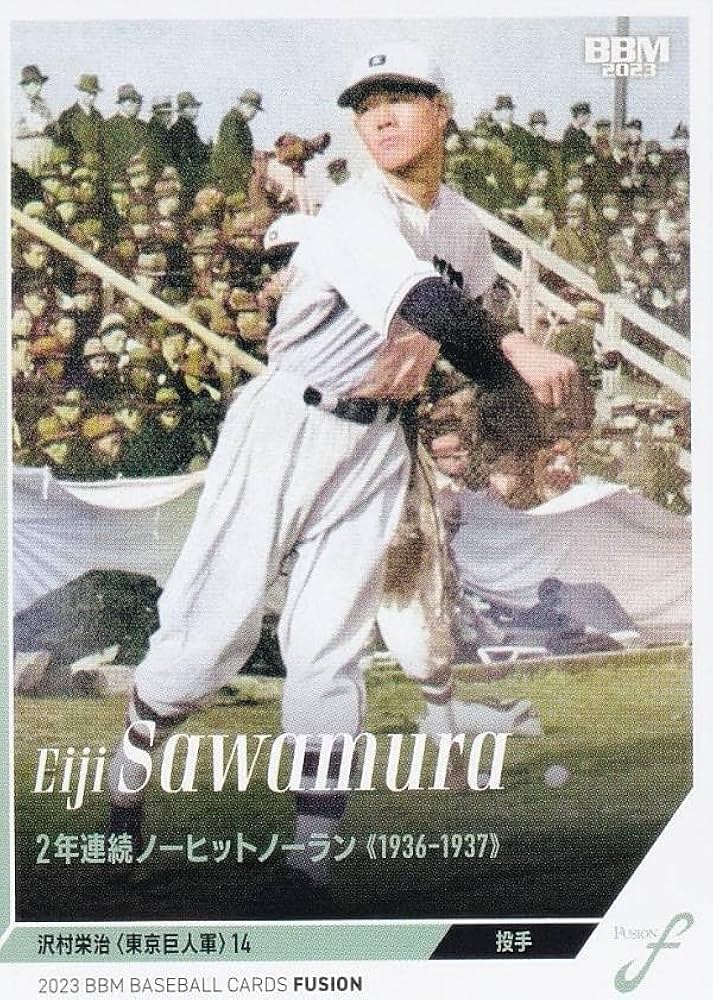
On the second American tour, he went a mere 11-11, which was when people first noticed something was slightly off. But then he arrived in the newly minted professional league back in Japan and the velocity came back. He threw what people called a “two-stage hop” fastball—a ball that seemed to rise twice before it reached the plate, a ball he claimed he threw by aiming at the front edge of home plate and letting it come up from there. In 1936, he pitched the first no-hitter in the history of Japanese professional baseball. In the spring of 1937, he went 24-4 with an ERA under 1.00, won the MVP award, and became the first pitcher in the league’s young history to lead five statistical categories in a single season: wins, ERA, strikeouts, shutouts, and winning percentage. He also, in the same spring, threw his second no-hitter.
He threw a third in 1940, after returning from his first tour of military duty. That made three no-hitters, total. No other pitcher in Japanese professional baseball matched it for thirty years.
He was the best pitcher in the league. How could his career end before it ever really began?
Sawamura was first drafted into the Japanese Army in January 1938. He was twenty years old. The war in China was in its second year, and Japan needed soldiers. Sawamura went to the front lines in China, where he contracted malaria, took a bullet through his left hand, and—because the army kept putting him in grenade-throwing competitions as a propaganda exercise, the famous pitcher and his famous right arm—destroyed the shoulder that made him what he was. He missed two full seasons.
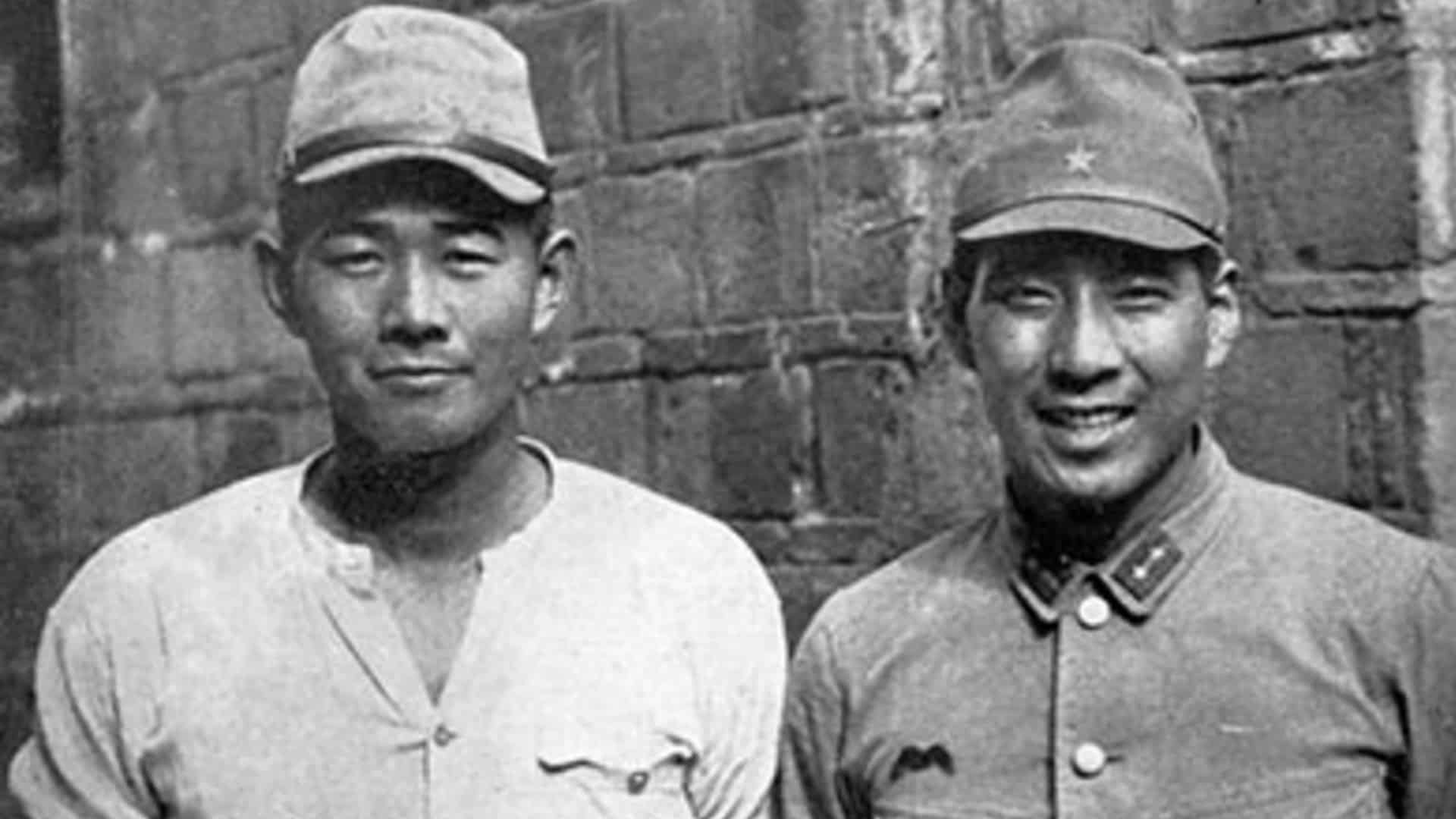
He came back in 1940 and pitched. He invented new ways to get people out. He learned a sinker, a cut fastball, whatever he could find that didn’t require the full force of his old delivery. He won 7 games in 1940 and 9 in 1941. He was not what he had been. He knew he was not what he had been. Before getting drafted, he struck out nearly 8 batters per nine innings. After, only half that. Still, he told his catcher once that he still thought he could throw harder than the new team ace. The catcher, who had caught both of them, had nothing nice to say.
In October 1941, he was called up again. He was shipped off to the Philippines. Two months later, Japan attacked Pearl Harbor and the Pacific War began. He survived, came back in 1943, and tried again. He could not pitch overhand anymore due to the injuries and the pain. He converted to throwing sidearm, but the control was gone. He went 0-3, giving up 13 runs in 17 innings. He made his last professional appearance as a pinch-hitter, fouling out to the third baseman. The Giants released him that winter.
He did not tell his wife.
He took a job as a machinist at an aircraft factory. He told his wife he still had a contract with the Giants. He told her this for months. When she asked how things were going at the team, he said they were fine. His salary at the factory was much lower than what the Giants had paid him. His wife’s family had questions about the arrangement, but he was proud, and he had always been proud, and he told them everything was fine.
In October 1944, he received his third draft notice. He left behind his wife and his daughter, who had been born in July of that year. He wrote letters from the transport ship. In one of them, he wrote: Sometimes in the trenches I think about the American tour. It all feels like a dream now.
On December 2, 1944, the transport ship was torpedoed and sunk by the American submarine USS Sea Devil in the East China Sea. More than two thousand men died. There were no survivors. Sawamura was twenty-seven years old.
After the war, the Giants retired his number, 14, the first retired number in Japanese baseball history. A few years later, the league created an award for the best starting pitcher of the year. They named it the Sawamura Award, and they give it out every fall*, and there are years when every serious conversation about Japanese baseball eventually arrives at the question of who deserves the Sawamura.
*Or they try to. There have been six seasons in which no winner was selected, the most recent being 2024.
His statue stands in Ise, outside Ujiyamada Station, his left leg kicked high in that distinctive delivery that his manager taught him on the first American tour—a technique borrowed, some say, from none other than Carl Hubbell. It is a strange little symmetrical quirk of history: Hubbell struck out five Hall of Famers in succession at the All-Star Game in July 1934, and four months later, a seventeen-year-old in Shizuoka did something very similar with less experience and more electricity and a fastball that rose instead of breaking. Two pitchers, the same year, making the best hitters in the world look lost. One of them pitched for 24 seasons and died at eighty-five. The other was dead at twenty-seven.
Sawamura’s father gave a postwar interview and wept. He said: Eiji dropped out of school. If he had stayed in school, if he had gone to university, they would not have called him up three times. It is all my fault.
It was not his father’s fault.
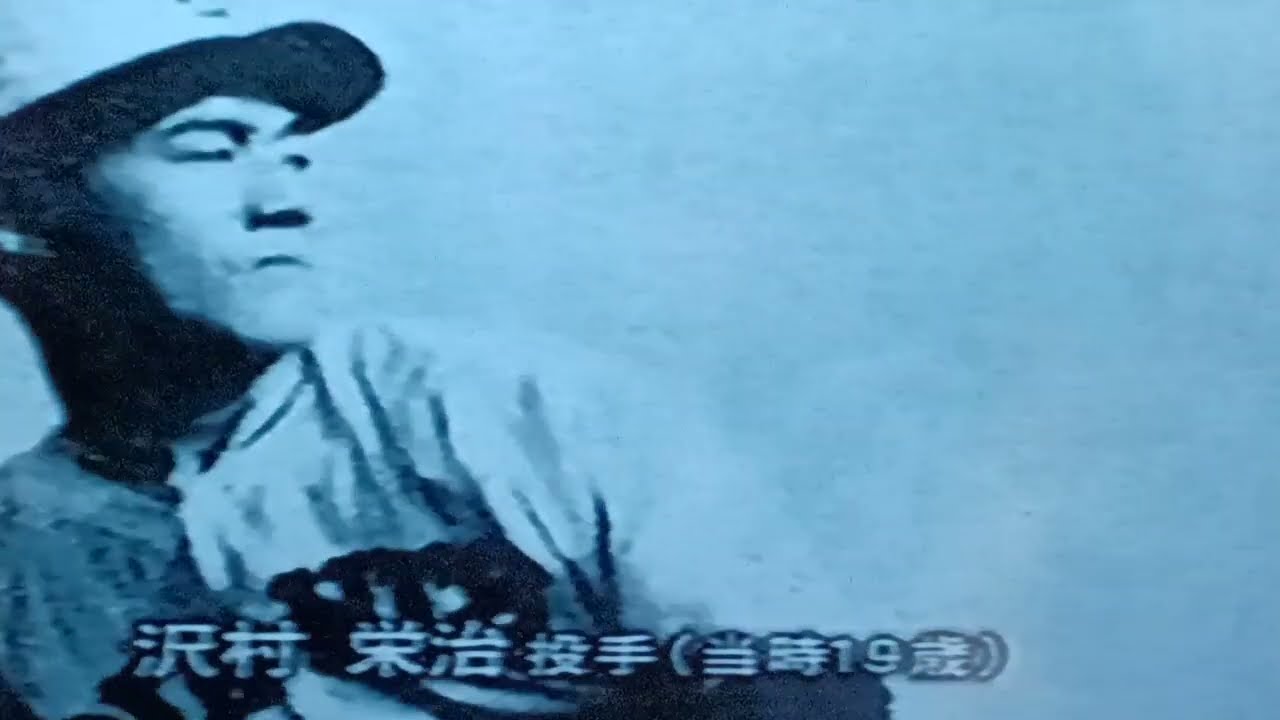
What we have left is a single piece of film, about two minutes long, discovered in Kanagawa Prefecture in the 2010s, cleaned up by NHK, and broadcast in 2015. It shows Sawamura on the mound, the high kick, the arm coming through. The quality is poor. You can see the shape of the motion more than the motion itself.
And one letter, from a transport ship, a man watching the ocean and thinking about California and how it felt to be young and to throw a baseball and to have Babe Ruth swing and miss.
It all feels like a dream now.
He did not know, when he wrote that, how little time was left. He did not know that the dream was almost over. He knew, probably, that the war was going badly. He knew his shoulder was gone. He had been told that the Giants did not want him anymore.
But he had once struck out Gehringer, Ruth, Gehrig, and Foxx in a row. He had once made the Americans send telegrams home. He had once been the best pitcher in the world for a few innings, and the best pitcher in the world had lost, 1-0, on a home run by Lou Gehrig.
He took the loss.
And still: what a game.
