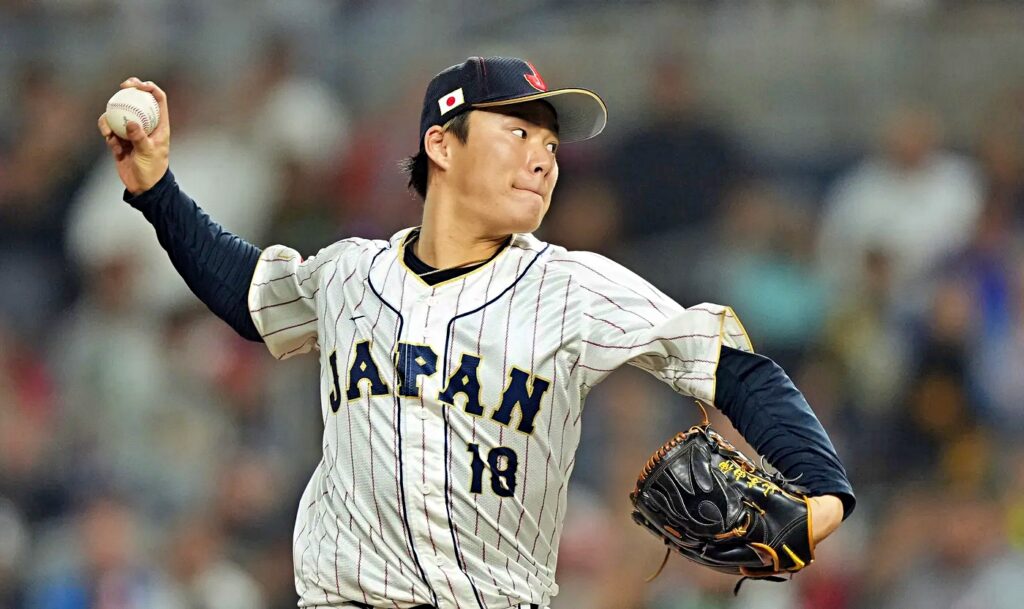
With the 2026 Major League Baseball season now underway, 13 Japanese imports are on active MLB rosters. All have something to prove.
Start with Shohei Ohtani and Yoshinobu Yamamoto of the Los Angeles Dodgers. Can they perform even better than they have in the past? Can mega-star Ohtani prove he can again be a force both at the plate and on the mound?
And Dodgers pitcher Roki Sasaki. Can he deliver on his generational talent after a rookie season marred by injury and inconsistency?
Pitchers Kodai Senga of the New York Mets, Shota Imanaga of the Chicago Cubs, and Yusei Kikuchi of the Los Angeles Angels want to prove they can rebound from subpar 2025 efforts.
What about outfielder/DH Seiya Suzuki of the Cubs – can he demonstrate that he’s worth a contract extension?
And then there are players – both rookies and veterans – simply trying to prove they belong in MLB: pitchers Tomoyuki Sugano of the Colorado Rockies, Yuki Matsui of the San Diego Padres, and Tatsuya Imai of the Houston Astros; designated hitter Masataka Yoshida of the Boston Red Sox; infielder/DH Munetaka Murakami of the Chicago White Sox; and infielder Kazuma Okamoto of the Toronto Blue Jays.
Let’s start with the Dodgers trio. The team used 17 starters in 2025 – tied for the third most of any team – but Yamamoto was their rock. He made 30 starts while only one other Dodger (Clayton Kershaw) had at least 20. He was second in the National League with a 2.49 ERA, led all qualified pitchers in batting average against (.183) and hits per nine innings (5.85), and finished third in the NL Cy Young voting.
Then he allowed just six earned runs in 37.1 playoff innings, throwing back-to-back complete games, and was named the World Series MVP. At just 27, and barring injury, it’s reasonable to expect more of the same in 2026.
One challenge could be that he is coming off the heaviest workload of his career – 211 innings between the regular season and postseason – but manager Dave Roberts doesn’t seem concerned.
“He’s just such a good competitor. He takes care of himself, but he wants to be great,” Roberts said. “He wants to win a Cy Young. But I think he prides himself on being consistent and being really good.”
Yamamoto struck out 14 batters in 9.2 spring training innings and had a 2.79 ERA. He also pitched for Samurai Japan in the World Baseball Classic, posting a 2.70 ERA in two appearances.
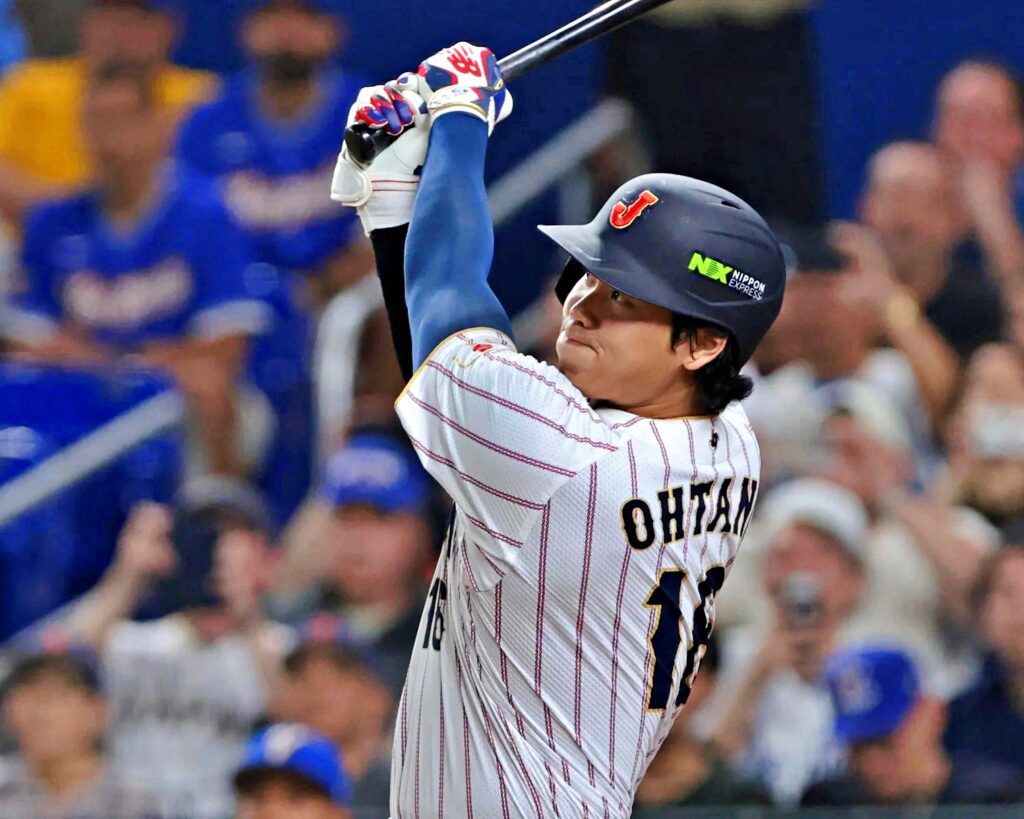
As for Ohtani, little can be added that hasn’t already been said. He’s an offensive force and can be one on the mound, assuming that he is fully ready after his Tommy John surgery following the 2024 season.
He has now won four Most Valuable Player Awards – only Barry Bonds has won that many (seven) – and a look under the hood shows how he has continued to improve as a hitter.
The Dodgers brought Ohtani along carefully last summer once he wrapped up his rehab from his second major elbow surgery. Near the end of the regular season, they began letting him go deeper into games. Over his final three starts, he threw 14.2 scoreless innings with 18 strikeouts and two walks. That included five no-hit innings versus Philadelphia and a strong season-ending effort against Arizona.
After enjoying a healthy offseason, Ohtani should be ready for 2026. He did not pitch in the WBC but hit .462 with three home runs and seven RBIs in four games.
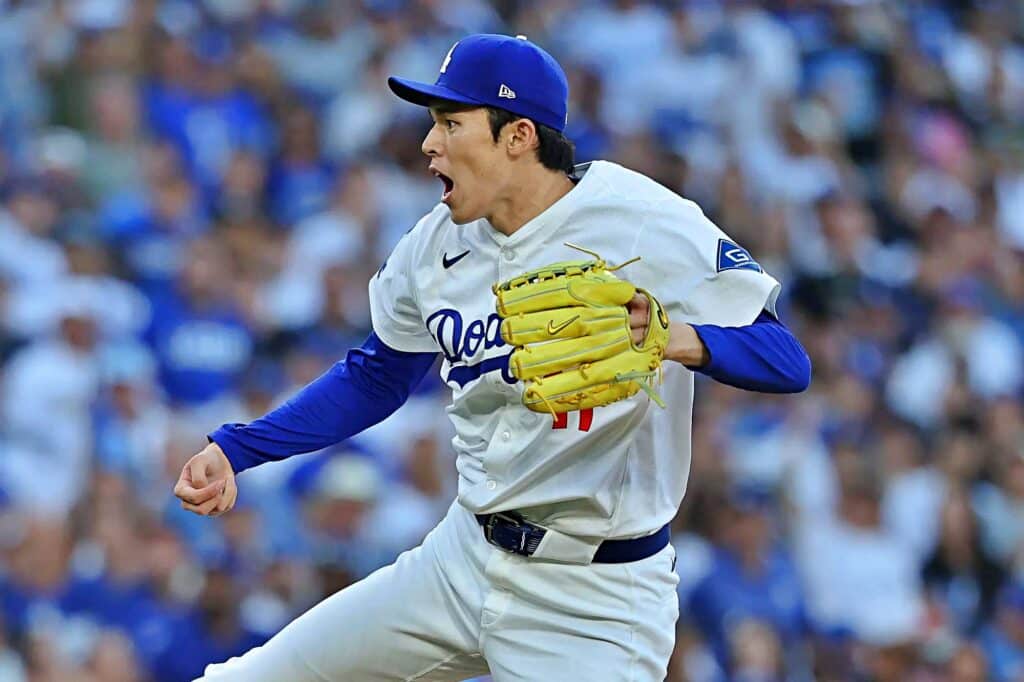
That brings us to Sasaki, who arrived in MLB last year as the No. 1 prospect in the game but made just eight starts before a right shoulder impingement sent him to the Injured List for more than four months. He returned late in the season and was very effective out of the bullpen, getting three saves and giving up just one earned run in 10.2 playoff innings.
An encouraging sign was the return of his velocity. While he was in the rotation, he threw just eight pitches at 99 mph or faster. After he returned as a reliever in late September, he threw 46 pitches at 99 mph or faster. He also worked on a cutter and stopped throwing his slider after returning from the injury.
“For us, it was about trying to get his delivery back,” president of baseball operations Andrew Friedman said after World Series Game 7. “I feel like we made a lot of progress on that. We’re definitely viewing him as a starter and as a really good one.”
Roberts said, though, that “He needs to develop a third pitch. It’s going to need to be something that goes left.”
One never knows how much spring training statistics mean, but Sasaki’s performance was very uneven, as he struck out 12 batters in 8.2 innings but walked 15.
Now, to the guys looking to rebound.
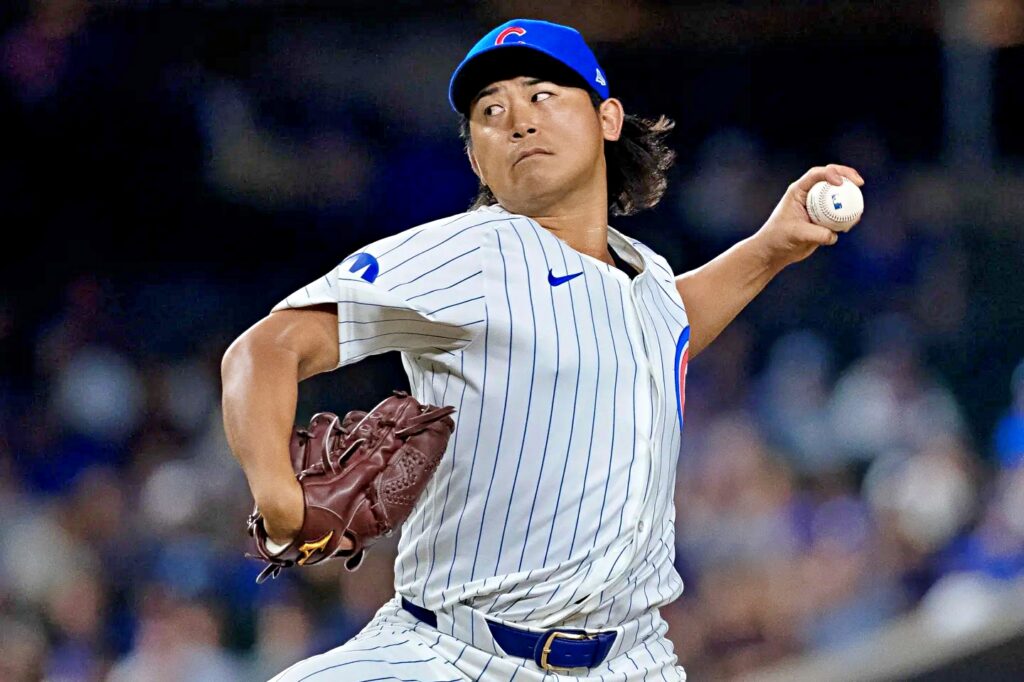
Imanaga accepted a one-year qualifying offer worth $22.025 million to remain with the Cubs for at least the 2026 season. The Cubs first had to decline a three-year, $57.75 million club option that was in his previous contract, and then Imanaga declined a $15.25 million player option triggered by Chicago’s initial decision. With both options rejected, Imanaga hit free agency. The new contract provides a $6.8 million pay raise over the initial 2026 salary under his original contract structure.
Over his first two seasons with the Cubs, Imanaga has recorded a 3.28 ERA with 291 strikeouts against 54 walks in 54 starts. He was an All-Star in 2024 and received down-ballot votes for the National League Rookie of the Year and Cy Young Awards. He took a step back last season, though, in part due to a hamstring injury he suffered in late May that reduced the strength in his lower half. He had a 3.73 ERA in 144.2 innings and also allowed 31 home runs – 20 in his final 12 outings.
His velocity was higher in spring training – 93 mph on average, compared to 90.8 in 2025 and 91.7 in 2024. In 18 innings, he allowed 20 hits but just three bases on balls and three home runs.
“He is going to respond to the things that happened at the end of the year,” Cubs manager Craig Counsell said. “He wasn’t happy [with] how he pitched. That’s what great competitors do — they respond to things like that.”
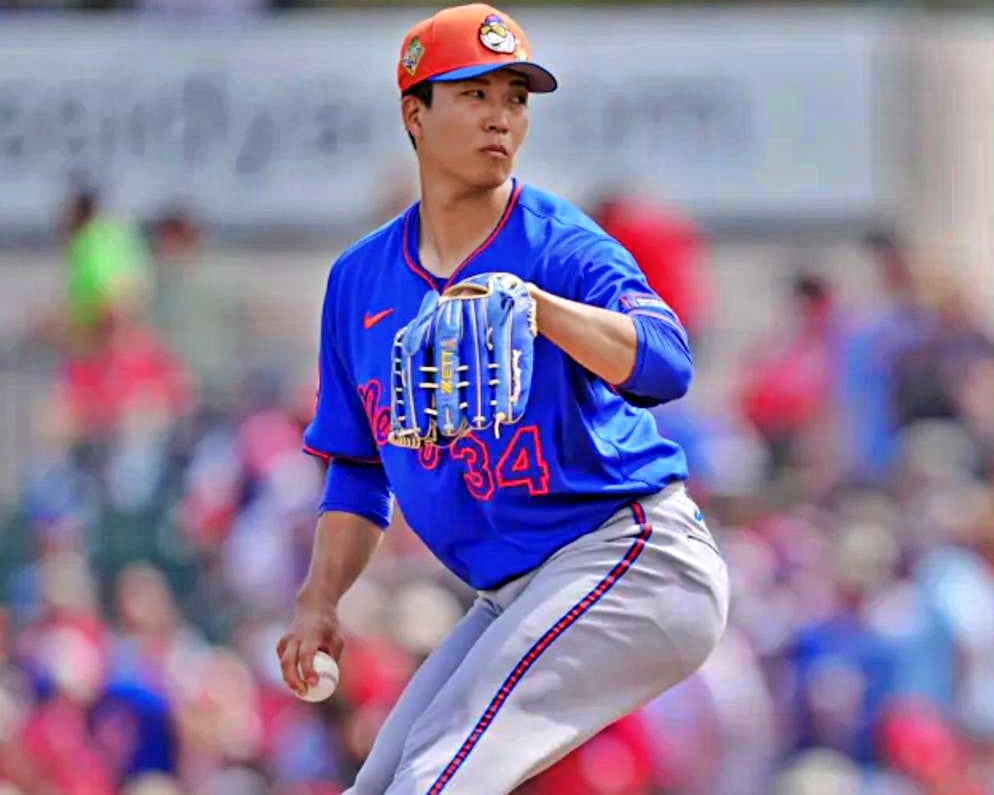
Senga’s three MLB seasons have been a classic case of ups and downs.
Signed before the 2023 season to a five-year, $75 million contract by the Mets, he was a National League All-Star as a rookie and finished second in Rookie of the Year voting. Year Two, though, was a total loss. He made just one start in the regular season because of injuries. He returned for the playoffs but allowed seven runs in five innings.
Year Three started like Year One but finished like Year Two. Senga posted a minuscule 1.47 ERA in his first 13 starts before a mid-June hamstring injury derailed him. His ERA ballooned to 5.90 in nine starts after returning to action, and he was demoted to AAA.
Senga said through an interpreter following the season finale that he “wasn’t able to control my body the way I wanted to [after] that injury, and unfortunately, that showed up on the results on-field.”
“Kodai has had two very inconsistent, challenging years in a row,” Mets president of baseball operations David Stearns said in October. “We know there’s potential. But can we put him in ink as making 30 starts next year? I think that would be foolish.”
So maintaining his health and refining his mechanics were primary goals for the 33-year-old during spring training, and the results were good. In 9.2 innings, he struck out 11 batters with just one walk and had a 0.72 WHIP.
Mets manager Carlos Mendoza said, “We saw it from the very beginning when we’re watching live BPs on the backfield. On the first day, 94-95 [mph], and then on Day One, when he’s playing in a real game, and you see 97-98 and just how sharp he was. He’s healthy, and we can see it now.”
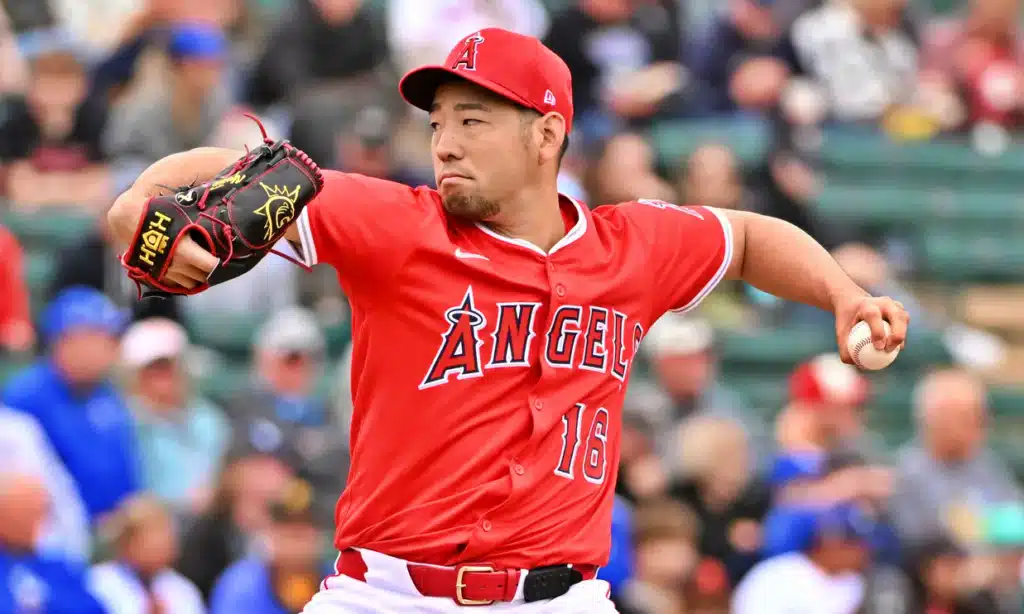
Kikuchi has been known for inconsistency through his seven MLB seasons, and 2025 swung in the wrong direction. In his first season with the Angels, he was somehow an All-Star, but his record was a middling 7-11. Pitching for an Angels team that finished last in the American League West with a 72-90 mark didn’t help matters. However, his walk rate (3.7/9 innings), hits allowed (9.1/9 innings), WHIP (1.42), and ERA (3.99) all went up, while his strikeout rate (8.8/9 innings) went down. Opposing batters averaged .259, the second-highest mark of his MLB career, and they hit .310 off his second-most used pitch, the four-seam fastball.
Lack of consistent command has been an issue during much of his MLB career, and he’ll need to get a handle on that to have a successful 2026 season.
Kikuchi was limited to 4.2 innings in spring training with a 1.93 ERA because he was with Samurai Japan in the WBC.
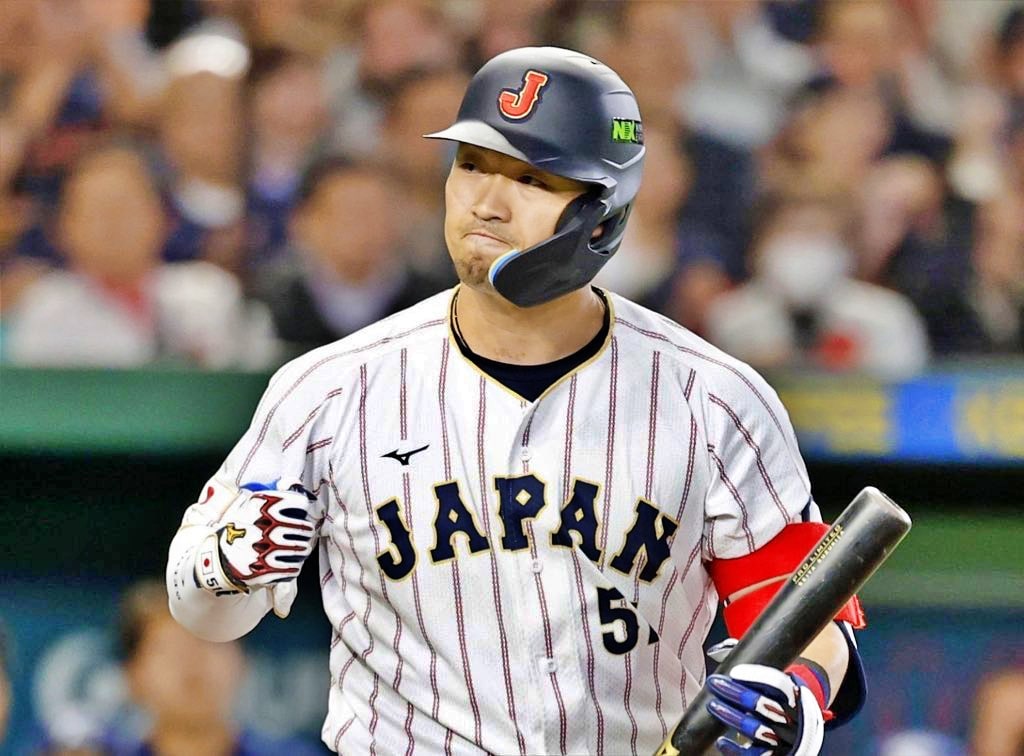
Suzuki is another who opens the season with question marks. He injured his knee on a stolen base attempt in Japan’s WBC loss to Venezuela on March 14 and was diagnosed with a minor sprain of the posterior cruciate ligament. He has been ramping up over the past week, but will begin the season on the Injured List.
He is beginning the final year of the five-year, $85 million contract he signed prior to the 2022 season. In his first four years, he has slashed .269/.346/.472 and averaged 22 home runs and 74 RBIs per season. In 2025, he achieved his first 30+ HR, 100+ RBI season (32/103) and hit several homers in the postseason.
Suzuki commented to ESPN about his future as he enters the last year of his contract: “I’m not sure. It depends on my performance. If I perform well, I want to stay. I feel like I still haven’t put up the numbers that people are expecting me to. It comes down to how I perform.”
Suzuki has said that he would be interested in a contract extension, though such talks have not yet taken place. He had just four at-bats in spring training but hit .333 with two home runs in the WBC.
Now to the three highly publicized rookies looking to prove their worth in MLB.
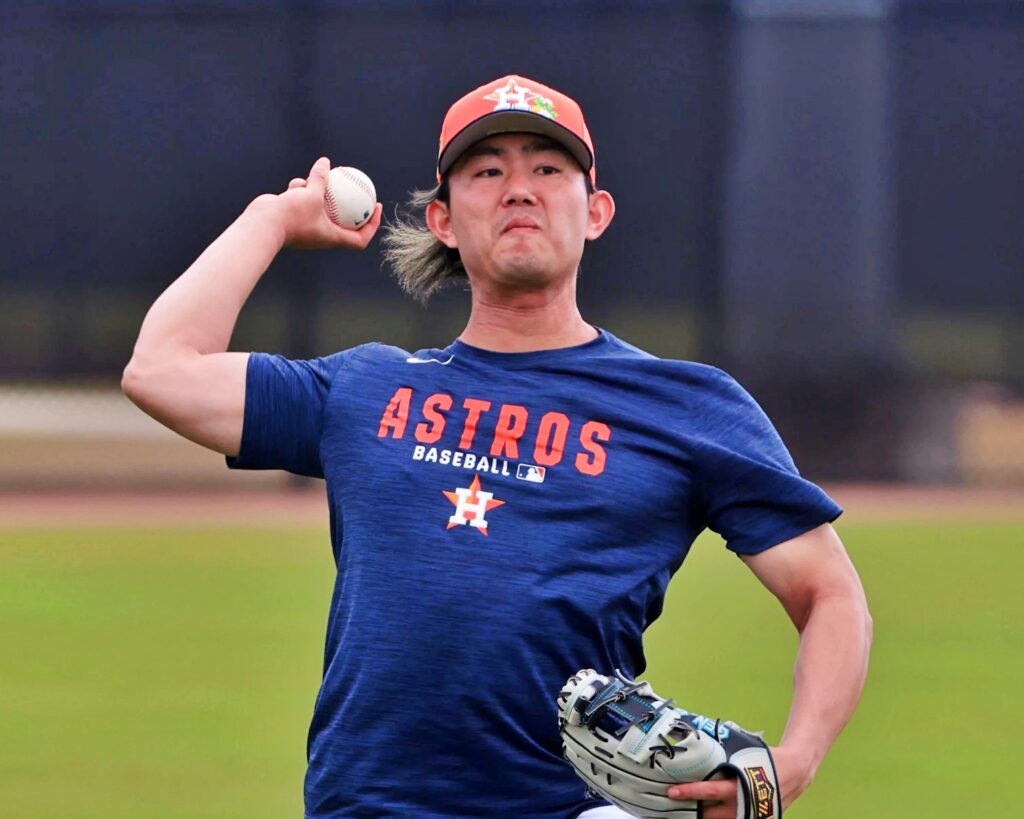
Imai signed a three-year, $54 million deal with Houston in the offseason after nine years with the NPB’s Seibu Lions, with whom he was 58-45 with a 3.53 earned-run mark and a high 4.4/9 innings walk rate. His best season in many respects was 2025, when he went 10-5 with a 1.92 ERA, allowed just 5.6 hits per nine innings, and reduced his walk rate to 2.5/nine innings – the first time he got below the 3.0/9 level.
He has three main weapons: a mid-90s fastball, slider, and changeup. He throws from a low, sidearm release point, which gives his fastball and changeup a lot of horizontal movement — both averaged about 15 inches of arm-side run in 2025 — while his slider has more of a tight vertical break.
Houston considered opening the regular season with a six-man rotation to help Imai acclimate to MLB, primarily because most NPB clubs utilize six starting pitchers, but the Astros eventually decided to go with a five-man setup.
Imai pitched six scoreless innings over three Grapefruit League outings, striking out seven.
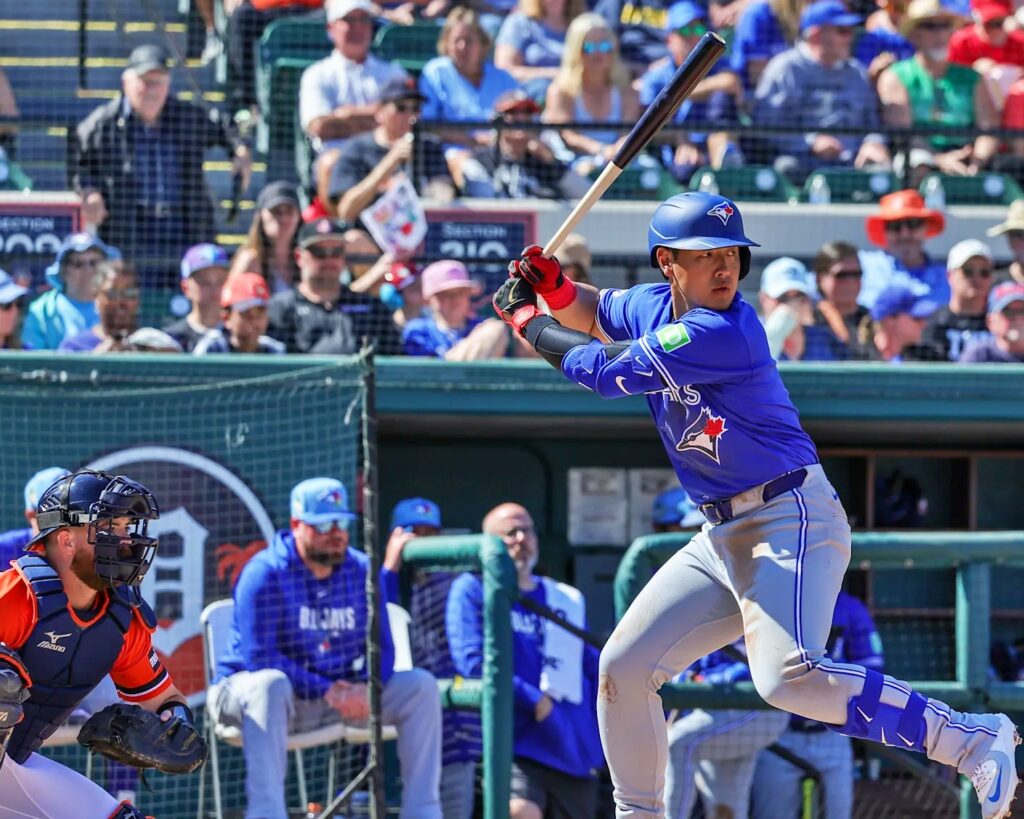
Photo: Mike Watters
The Blue Jays signed third baseman Okamoto to a four-year contract worth $60 million. The 29-year-old had long starred for the Yomiuri Giants and, on paper, brings an immediate offensive upgrade to the Blue Jays’ lineup.
Okamoto was limited to 69 games in 2025 due to a left elbow injury suffered in a collision with a batter running down the line. But he hit .327 in those 69 games with a .416 on-base percentage, .598 slugging percentage, 1.014 OPS, 15 home runs, and 49 RBIs.
For nearly a decade, Okamoto was a consistent force in the middle of Yomiuri’s lineup, stringing together six consecutive seasons of 30-plus home runs with a peak of 41 in 2023. He’ll be counted on to, in part, replace the production of Bo Bichette, who went to the New York Mets in free agency. In spring training, he averaged .316 in 19 at-bats with a 1.067 OPS.
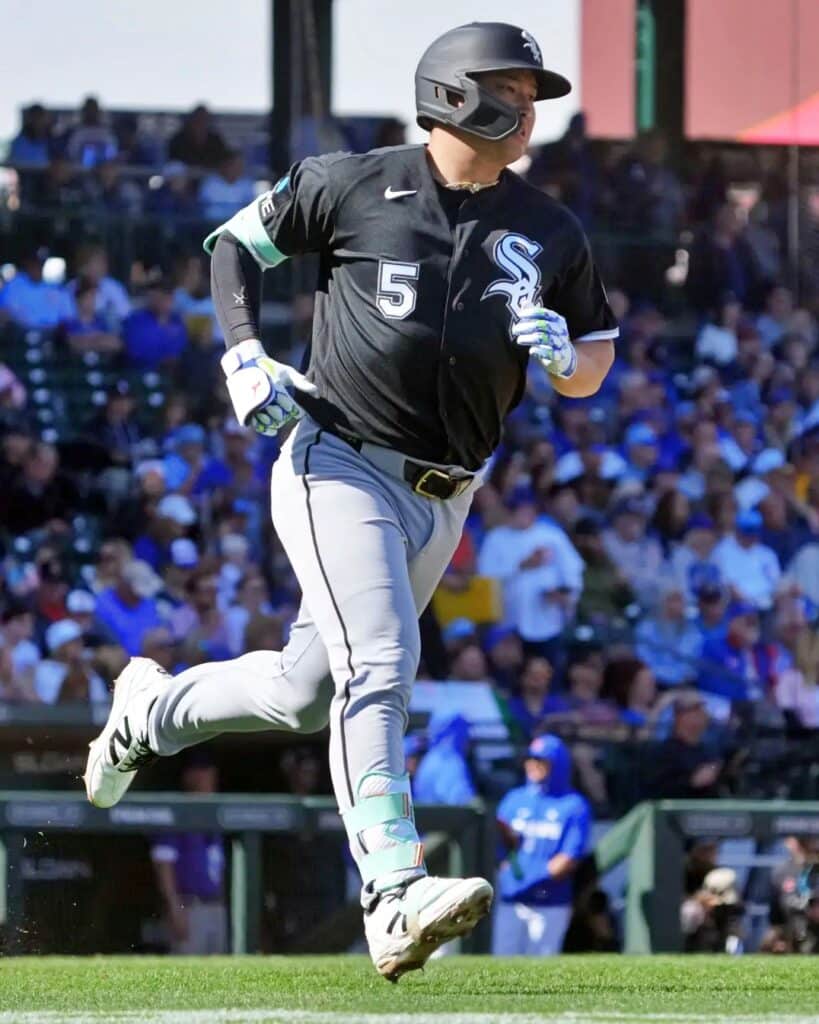
Photo: Rick Scuteri
Murakami comes to MLB at just 25, but with eight NPB seasons with the Yakult Swallows under his belt. In that time, he showed tremendous power but also a lot of swing-and-miss paired to go with below-average defense.
He slashed .270/.394/.557 in those eight seasons and averaged 33 home runs per year – 38 from 2019 through 2024. He hit 56 in 2022 when he won the Central League Triple Crown (a .318 average and 134 RBIs) and Most Valuable Player Award, and he banged 22 in just 56 games in 2025 after returning from injury. His maximum exit velocity peaked at 117 mph.
However, he struck out in nearly one-third of his career at-bats, and he’ll be facing high-velocity pitchers more consistently than he did in NPB. Defensively, he is generally viewed as a first baseman or designated hitter. He’s played third base but not graded well in advanced metrics.
Will Murakami be a productive offensive player for the White Sox or more of a Joey Gallo type – the occasional home run blast mixed with a lot of strikeouts and a low average? Gallo, at least, was a very good defender with two Gold Glove Awards to his credit. During the spring, Murakami hit .276 with a homer, three RBIs, and eight strikeouts in 29 at-bats.
This leaves three players looking to get a stronger footing in MLB.
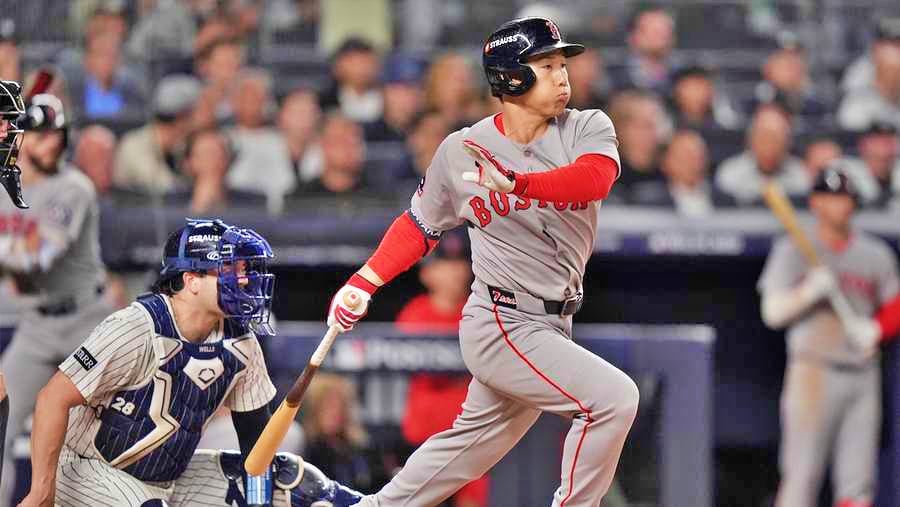
Yoshida is in a curious position going into the fourth season of a five-year, $90 million contract with the Red Sox.
On the surface, he’s been decent – a .282/.337/.425 slash line to this point. But his power has never fully materialized – just 29 home runs – and his defensive liabilities turned him into a full-time designated hitter last season. After returning from shoulder surgery in 2025, Yoshida appeared in 55 games and slashed .266/.307/.388 with four home runs, 26 RBIs, an 88 wRC+, and a 0.2 bWAR – barely above replacement level.
Yoshida did finish the 2025 season strongly, posting a .333/.351/.486 slash line in September with two home runs and 13 RBIs. He followed in the playoffs with four hits in seven at-bats, including a key two-run single in Game One versus the Yankees. He hit .211 in 19 spring training at-bats but averaged .375 with a 1.257 OPS over five WBC games.
Boston has plenty of options for both the outfield and first base, though, so where Yoshida fits is unclear. The Red Sox could try to trade him, but he’s owed $36 million over the next two seasons, and his production hasn’t matched that. Speculation is that, to get a deal done, they would have to include a good prospect with Yoshida, but they included some of their prospects in offseason trades.
“When he was healthy in ‘23 the first half of the season, he was one of the best hitters in the big leagues,” Boston manager Alex Cora said. “He got banged up. We kind of covered it for a while there, and he had injections [for his right shoulder].”

Sugano, a free agent after his first MLB season with Baltimore, signed a one-year, $5.1 million agreement with Colorado in mid-February.
The Rockies, who haven’t made the playoffs since 2018 and bottomed out with a 43-119 record in 2025, took a flier on Sugano in part because he walked an average of just 2.1 batters per nine innings. In addition, the 36-year-old features a mix of six pitches and brings experience to a young staff, having pitched 12 seasons for Japan’s Yomiuri Giants, winning three league MVP awards and two Sawamura Awards – Japan’s equivalent of the Cy Young Award.
With the Orioles, Sugano went 10-10 with a 4.64 ERA, 1.33 WHIP, and 106 strikeouts in 157 innings over 30 starts. He did, though, allow 33 home runs – an average of almost two per game – which could be a red flag, given that he’ll be pitching half the time in Coors Field.
“The amount of home runs that I gave up, I want to decrease that,” Sugano said through an interpreter. “But, at the same time, I don’t want to be afraid to throw strikes, so I’m making sure I have the mentality of attacking hitters. I want to improve my splitter, making sure I execute it really well.”
He pitched four scoreless innings in the WBC and posted a 2.45 earned-run mark in two spring training appearances.
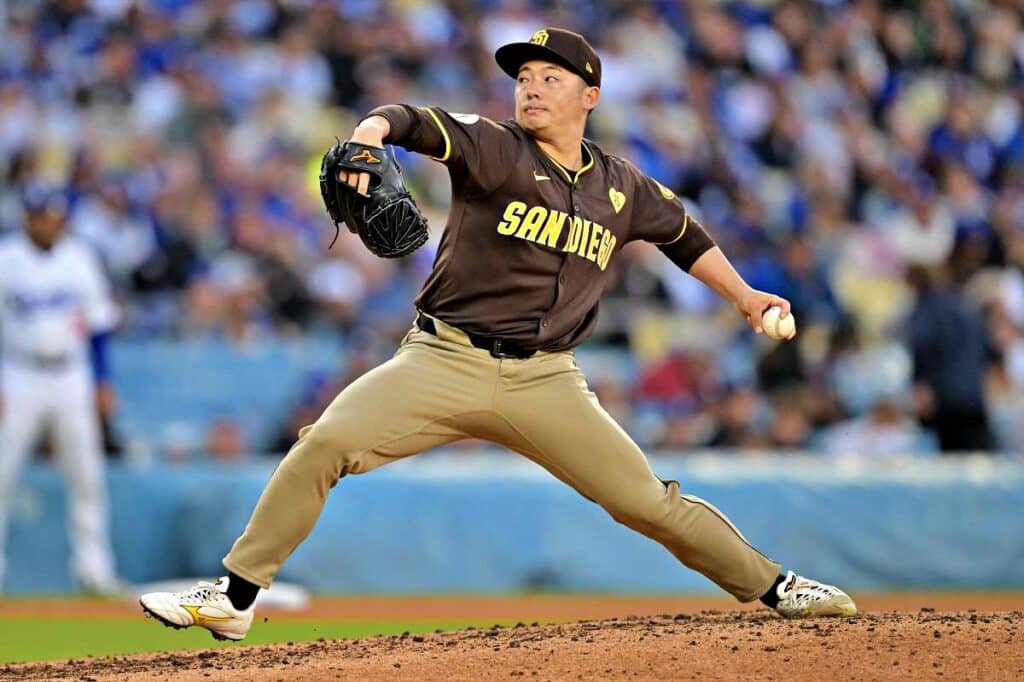
Photo: New York Times
Matsui, 30, will begin the season on the Injured List because of a left adductor/groin strain suffered during a live batting practice session.
Matsui has two years remaining (plus a player option) on the original five-year contract he signed with San Diego. One report labeled him as “aggressively average” in his first two seasons – a 3.86 ERA, 3.52 xERA, and 4.40 FIP in 126.0 innings, all totaling up to exactly 0.0 fWAR.
The Padres’ bullpen in 2025 ranked first in MLB in ERA (3.06) and saves (49) while finishing in the top three in strikeout rate (25.8%) and FIP (3.53), but Matsui did not add a lot to that. Some of his key numbers went in the wrong direction in 2025 – hits, ERA, FIP, WHIP, walk rate (4.7/9 innings) were up, while his strikeout rate was down.
The above-mentioned report identified his primary issue as having no vertical variance in his pitch offerings — his slider, sweeper, and splitter are all close to each other on the y-axis — other than his fastball, which tends to get hit hard if it’s not up in the zone. “Matsui needs to find the right balance of his current offerings to stand a better chance against MLB competition.”
NOTES: Padres right-hander Yu Darvish will miss the 2026 season after undergoing UCL repair surgery with an internal brace on his right elbow. Darvish also underwent Tommy John surgery and missed the entire 2015 season while pitching for Texas. In addition, he had arthroscopic surgery on that elbow in 2018 and had a cortisone injection to rehab a bone spur after the 2023 campaign. Whether he will pitch again is uncertain. Darvish, who will turn 40 in August, has three seasons remaining on his contract but has spent the last three hampered by injuries. He made 15 starts last season, posting a 5.38 ERA, and he acknowledged that the elbow discomfort made him uncertain how long he would be able to continue. In 13 MLB seasons, he has put up a 3.65 ERA, 115 wins, and 2,075 strikeouts. This past season, he became the winningest pitcher of all-time across both Japan and MLB, with 208 victories . . . Pitcher Kona Takahashi returned to NPB after being posted to MLB. According to a source, he had three MLB offers on the table. He instead signed a new multi-year deal with the Seibu Lions, one with opt-out clauses that would allow him to return to the open market after this season as an unrestricted free agent rather than part of the posting system. The best of Takahashi’s 11 years in Japan came from 2022-23. He had a 2.20 ERA in 49 starts over those two seasons with 248 strikeouts in 330 2/3 innings . . . Pitcher Kenta Maeda, who spent tens seasons in MLB with the Dodgers, Minnesota Twins, and Detroit Tigers, returned to NPB on two-year contract with the Rakuten Golden Eagles . . . Pitcher Shinnosuke Ogasawara, who spent time with the Washington Nationals last season, did not make the Nats’ opening day roster. A non-roster invitee to spring training, he gave up a hit, a run, and two walks in 3.1 innings and was reassigned to minor-league camp on March 4 . . . Shotaro Morii, the 19-year-old signed a year ago by the Athletics, is ticketed to begin the season at Class A Stockton (Calif). The A’s are planning to work him as a two-way player, at least at this point . . . Through 23 games for Stanford this season, Rintaro Sasaki has slashed .265/.426/.590 with seven home runs and 15 RBIs . . . Well-known NPB watcher Yuri Karasawa highlights the following as early candidates to be posted after 2026 season: 3B/RF Teruaki Sato (Hanshin Tigers), 2B Shugo Maki (Yokohama DeNA BayStars), RHP Hiromi Itoh (Hokkaido Nippon Ham Fighters), RHP Atsuki Taneichi (Chiba Lotte Marines), RHP Kaima Taira (Saitama Seibu Lions), RHP Hiroto Saiki (Hanshin Tigers), RHP Masato Morishita (Hiroshima Carp), and LHP Hiroya Miyagi (Orix Buffaloes). However, the looming negotiations for the next MLB Collective Bargaining Agreement are clouding the picture. There most likely will be a player lockout after the 2026 season, and there possibly could be a work stoppage that would affect the 2027 campaign.