Photo: Ashley Landis, Associated Press
When the 2025 season began, there were 12 Japanese import players on the rosters of Major League Baseball clubs – two more than in the year before and five more than in 2022, providing evidence of the growing impact of Japanese players in MLB.
Now, it’s possible that the impact could be even greater because eight of the 12 will help lead their teams into the playoffs.
The defending World Series champion Los Angeles Dodgers have three in two-way megastar Shohei Ohtani, starting pitcher Yoshinobu Yamamoto, and talented rookie pitcher Roki Sasaki, who missed much of the season because of injury but is now in the bullpen mix. Division rival San Diego boasts two imports in starter Yu Darvish and reliever Yuki Matsui, as do the Chicago Cubs with starter Shota Imanaga and designated hitter Seiya Suzuki. Rounding out the playoff-bound imports is Boston designated hitter Masataka Yoshida.
For the Dodgers, Ohtani and Yamamoto had strong September performances and are poised to lead the team deep into the playoffs, which begin with a Wild Card Series against the Cincinnati Reds. Sasaki, though he began the season poorly under the weight of great expectations and then shoulder trouble, showed his stuff in two relief appearances during the final week of the regular season and could help stabilize an inconsistent Dodger bullpen.
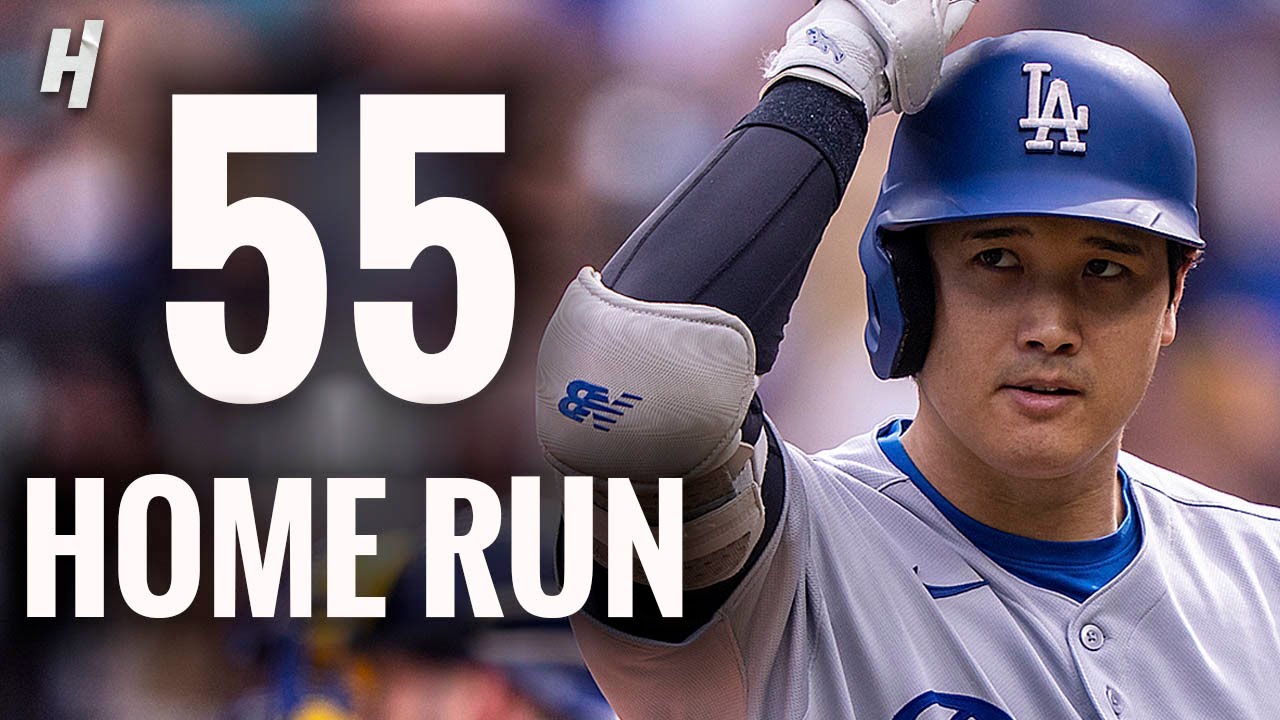
As a designated hitter, Ohtani posted a .312 batting average in September with 10 home runs, 17 RBIs, and a 1.165 OPS. For the season, he averaged .282 – precisely his career mark – and went over the 50-home run mark for the second straight season with 55. He also drove in 102 runs. He is the first player with 50 home runs in back-to-back seasons since Alex Rodriguez in 2001-02 and is also the first in MLB history to hit 50 homers and record 50 strikeouts as a pitcher in a single season.
Ohtani also finished strongly on the mound. In three starts covering 14.2 innings, he allowed just eight hits, two walks, and no runs while striking out 18 batters. Overall, he was 1-1 with a 2.87 earned-run mark and 1.04 WHIP, and he struck out 62 batters in 47 innings while walking just nine.
Yamamoto, too, gained momentum in the season’s final stretch, going 1-0 with a microscopic 0.67 ERA in four September starts. He allowed just seven hits and two runs in 27 innings and had 34 strikeouts. In his second season with the Dodgers, he was 12-8 overall with a 2.49 ERA and 201 strikeouts in 173.2 innings.

The innings total is the third most of his career. He pitched 193 innings for the Orix Buffaloes of Japan’s Nippon Professional Baseball in 2021 and 2022.
Yamamoto likely could have had a better record this season if he had received more run support. Among the 119 pitchers to start at least 18 games this season, Yamamoto has received the fourth-worst level of run support while still in the game, according to Baseball Reference.
The Dodgers have averaged 4.10 runs per game in Yamamoto’s starts and have slashed .226/.310/.367. Only 70 of the 123 runs scored while Yamamoto was still the active pitcher of record and had not yet been replaced on the mound. In their other games this season, the Dodgers have scored 5.3 runs per game while slashing .261/.335/.456.
Sasaki had not pitched in an MLB game since May 9 because of a right shoulder impingement but was activated in the last week of the regular season. In two outings covering four innings, he gave up no runs, one hit, and no walks while striking out four batters. In his second outing, against Seattle, he got out of a jam by striking out Mariner slugger Cal Raleigh on three straight splitters.

“I don’t think we’d have had that same outcome in April,” manager Dave Roberts said.
Against Seattle, Sasaki got a high of 100.1 mph on his four-seam fastball and threw 11 strikes out of 12 pitches.
During his rehab, Sasaki spent time with Rob Hill, the Dodgers’ director of pitching, and his fastball velocity increased.
“I think a lot of young, talented players just out-talent leagues and don’t need to make any adjustments,” Roberts said. “It happens with Americans; it happens with pitchers, with position players . . . with a lot of young players.”
For the Cubs, Imanaga was very effective during much of his second MLB season, but he had a rough September. He made five starts, giving up 21 hits and 12 earned runs in 22 innings through the first four. In his final outing, he allowed nine hits and eight earned runs in 5.2 innings against the New York Mets.
After that game, Imanaga acknowledged the need to make some adjustments prior to Chicago’s Wild Card Series against San Diego.

“If I said I was confident,” he said through an interpreter, “I think people hearing that would just think I’m just trying to be optimistic. But, within the next coming days, I just want to do all the adjustments that I need to make to regain that confidence.”
Overall, Imanaga’s 31 home runs allowed are the third most among MLB starters, and his mark of 1.93 home runs per nine innings is the second-highest in the National League.
On the hitting side, the Cubs’ Suzuki suffered through a long-term power outage until the final few games of the regular season. After hitting 22 home runs by the end of June, he then hit only five from July 1 through September 24 – nearly three full months – and went homerless from August 6 until hitting two against the Mets on September 25. However, he hit five in the final four games of the season, and the Cubs obviously are hoping the trend continues in the playoffs.
“That’s a real positive note, for Seiya to hit a couple of home runs,” Cubs manager Craig Counsell said after the September 25 game. “I think just seeing some balls go out of the park, frankly, for him is something he needed. So, a good night and an important night.”

Through an interpreter, Suzuki said, “I think more recently, there’s more [a matter of] just going up there and taking the best swings I can. I think that’s helped.”
For the season, Suzuki averaged .245 with 32 home runs, 103 RBIs, and an .804 OPS. The OPS was a drop of 44 points from his 2024 mark, and his .326 on-base percentage was the lowest of his four MLB seasons.
San Diego, which finished second in the NL West behind the Dodgers, hopes Darvish can step up and aid the Padres’ playoff push that begins against the Cubs. Darvish, 39, finally got back on the mound on July 7 after dealing with an elbow problem since spring training. While he has had some good efforts, his overall performance has been spotty.
In many respects, his September performance mirrored that of August. He was 2-1 with a 4.81 earned-run mark, compared to 2-1/4.88 in August. He made five starts and pitched 24 innings each month. The differences – 24 hits allowed in September vs. 15 in August, and a 1.32 WHIP in September compared to a minuscule 0.88 figure in August.

For the season, Darvish finished 5-5 with a 5.38 ERA and 1.18 WHIP. The WHIP is pretty much in line with his career mark of 1.14.
Matsui, in his second season with the Padres, closed his regular season in a strong fashion, allowing just one hit, one run, and two walks in 8.2 innings. After a difficult stretch during June and July, he settled down in August and then had a fine September.
For the regular season, he posted a 3-1 record with a 3.98 ERA and 1.36 WHIP. His walk rate remains a concern, though. He had a high rate of 3.9 walks per nine innings last season, and that figure increased to 4.7 in 2025.

Over in the American League, Boston’s Yoshida may be peaking at a perfect time, as the Red Sox face a Wild Card Series challenge against the New York Yankees.
After returning to action in early July following a slow recovery from off-season labral repair of his right shoulder, he averaged just .239 in July and only .214 in August. However, he posted a .333/.351/.486 slash line in September with two home runs and 13 RBIs.
Red Sox manager Alex Cora had earlier said that Yoshida had been “grinding” with hitting coach Pete Fatse, and the work appears to have paid off.
“I’ve been getting into the clubhouse early, working with the hitting coaches. Thanks to them. I’m really thankful for putting that work in every day. And I think I’ve been able to show what we’ve been working [on], in the cage [and] on the field,” Yoshida said.
Cora added, “We have a great offense, but when he’s going like this, we’re elite.”
Yoshida continues to primarily be a designated hitter and occasional pinch-hitter, playing just six games in the outfield during the regular season.
So, now to the import players whose teams did not make the playoffs.
Baltimore pitcher Tomoyuki Sugano made four starts in September and was effective in just one, allowing four hits and one run in six innings versus Toronto on September 13. In his other three outings, he gave up 18 hits and 11 earned runs in 10.1 innings. A bright spot in the month was that he walked just one batter in 16.1 innings.
There have been ups and downs during Sugano’s first season in Major League Baseball. He recorded 10 quality starts and could be counted on to take his regular turns. During a season in which 28 Orioles spent time on the injured list, Sugano made 30 starts without going on the IL.
For the season, Sugano finished 10-10 with a 4.64 earned-run mark and 1.33 WHIP.
The Mets collapsed and missed the playoffs, despite a huge payroll, and starting pitcher Kodai Senga was part of that. Senga had a rough time after returning to action on July 11 after a stint on the Injured List because of a strained hamstring in his right leg, and he was optioned to the minor leagues in September.
From the beginning of the season through his July 11 start, he had a 1.39 earned-run average and 1.13 WHIP, but he finished the season with a 7-6 mark and 3.02 ERA. In August alone, Senga pitched to an 0-3 mark, 6.18 ERA, and 1.63 WHIP.

He did not improve after being sent to the minors, either. He posted a 4.66 ERA in two games with AAA Syracuse and allowed six hits and three earned runs in a three-inning stint with AA Binghamton.
Senga then struggled in a September 24 live batting practice session, and his fastball velocity was down to around 93 mph.
Los Angeles Angels’ starter Yusei Kikuchi had a difficult month of September, with a 1-2 record, 5.92 earned-run mark, and 1.40 WHIP, though he pitched five scoreless innings against Kansas City in his final start to get a victory.
Overall this season, he was inconsistent. His season marks in his first year with the Angels were 7-11, a 3.99 ERA, and a 1.42 WHIP. He walked 74 batters and struck out 174 in 178.1 innings. He had career highs in innings pitched and games started (33), and his ERA marked just the second time in his seven-year MLB career that he’s gotten below the 4.00 mark.

However, the 1.42 WHIP was his highest since 2022. He has had intermittent issues with command throughout his MLB career, and that has been the case this season. After averaging a career-low 2.25 walks per nine innings in 2024, he averaged 3.70 per nine this year.
“I’m glad I was able to pitch and stay in the rotation the entire year,” Kikuchi said through an interpreter. “I’ve been able to do that for the last three seasons. I think I had another gear, and I think I can take the positives from this year, and I can be even better next year.”

The final member of the import group is pitcher Shinnosuke Ogasawara. Signed to a two-year deal with Washington in the off-season, he made his MLB debut on July 6 but was returned to AAA Rochester after two difficult starts. He returned to the Nationals on August 2, though, and has gone 1-1 with a 6.98 ERA in 23 relief appearances. In September, he was inconsistent, posting a 9.20 ERA in ten outings, but his numbers were inflated by four games in which he gave up a combined 12 earned runs in 5.1 innings.
NOTES: In eight starts with AAA Scranton/Wilkes-Barre, Kenta Maeda posted a 3-3 record with a 4.64 ERA. Maeda began the season with the Detroit Tigers, but was released. He signed a minor-league contract with the Cubs, but was again released and took a minor-league deal with the New York Yankees . . . 18-year-old Japanese two-way (pitcher/infielder) prospect Shotaro Morii posted a slash line of .258/.399/.384 with the Athletics’ team in the Arizona Complex League. He played only shortstop in the ACL, but has since pitched some during instructional league action . . . Relief pitcher Koyo Aoyagi, who signed a minor-league deal with the Philadelphia Phillies in the off-season, was released in late July and is back in Japan with the Yakult Swallows. He is 0-1 in two relief appearances covering nine innings. . . Former MLBer Shintaro Fujinami is with the Yokohama DeNA BayStars. In four relief outings, he’s pitched 21 innings and posted a 3.43 ERA. He also has allowed an average of 3.4 bases on balls per nine innings, somewhat of an improvement over his struggles with command over the last few seasons.