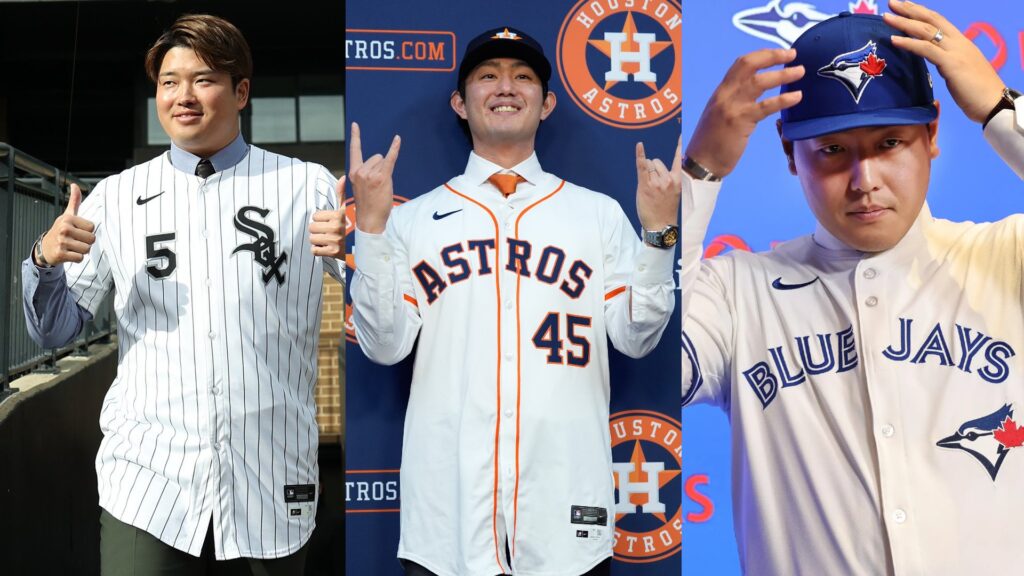
How Nippon Professional Baseball stars Munetaka Murakami, Tatsuya Imai, and Kazuma Okamoto will fare in Major League Baseball remains to be seen, but their decisions have already defied expectations, as all three signed with teams not traditionally associated with Asian talent.
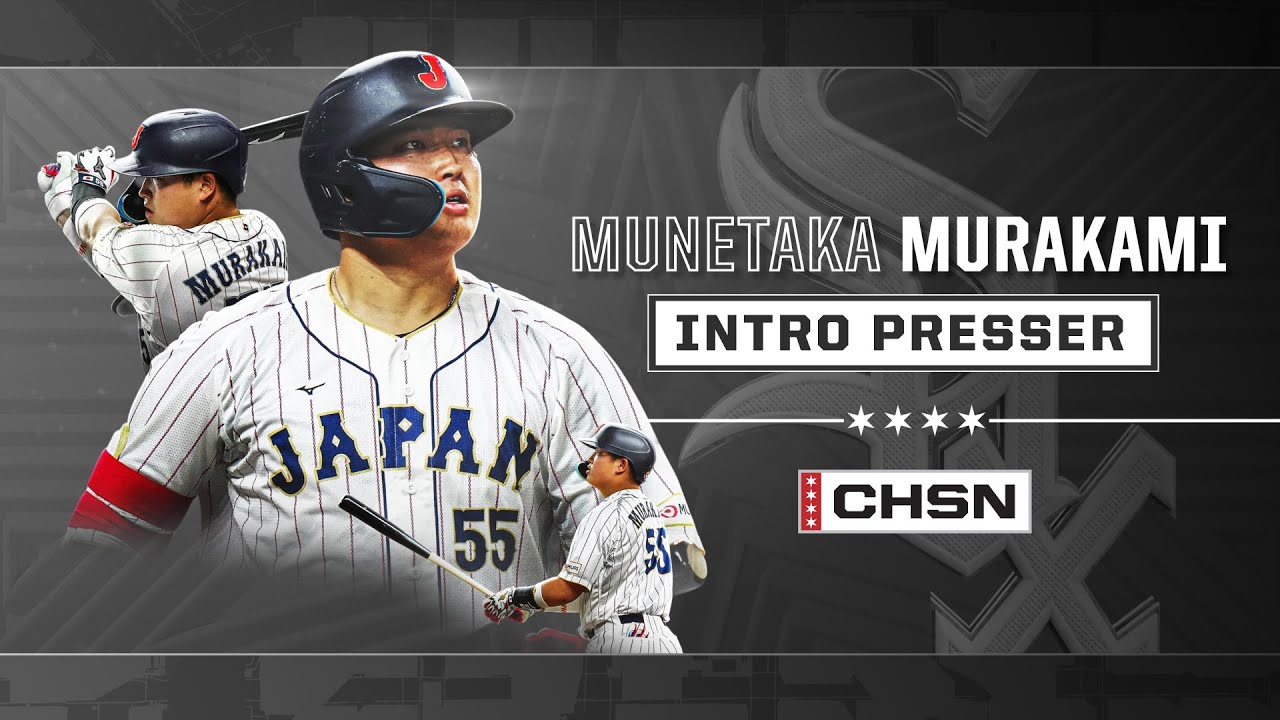
Murakami is the first Japanese player to suit up for the Chicago White Sox since Kosuke Fukudome, back when players like Jamie Moyer and Jim Thome were still active, a reminder of just how long ago that era was. In fact, he is only the fourth Japanese player in franchise history, joining Tadahito Iguchi and his longtime manager, Shingo Takatsu.
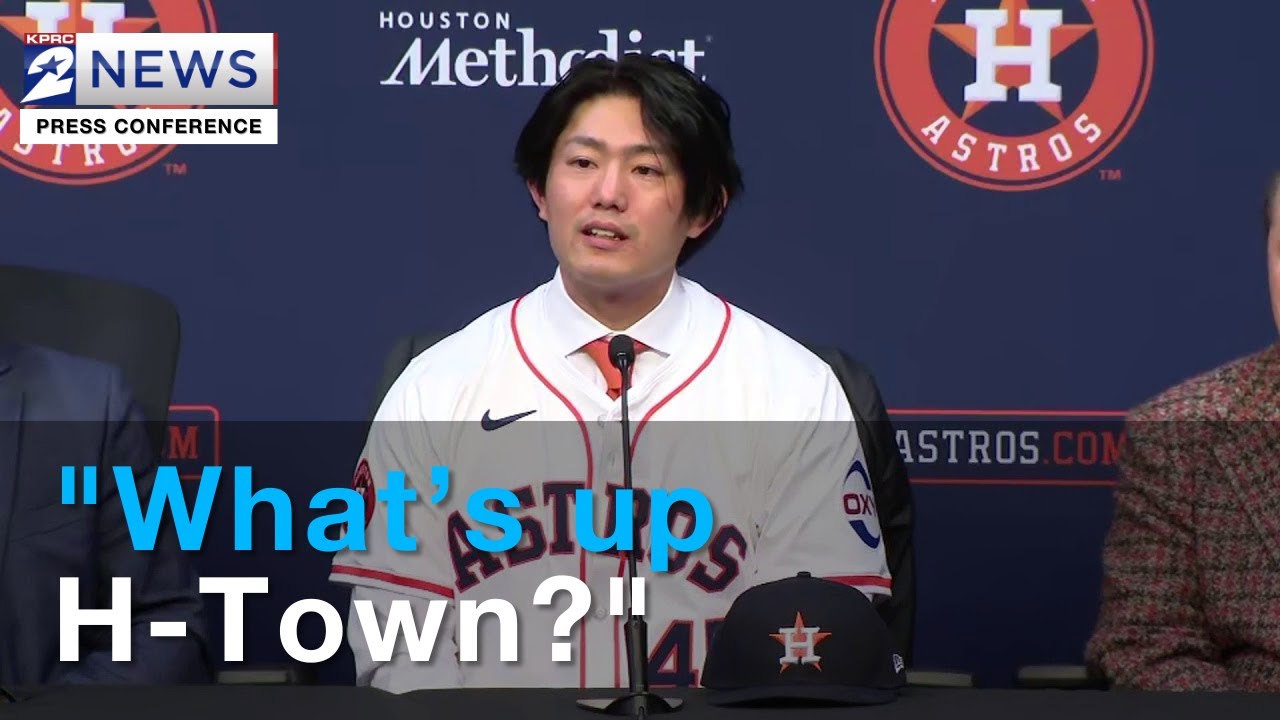
The Houston Astros have featured Japanese players like Yusei Kikuchi and Nori Aoki in recent years, but Imai is their first signing directly from NPB. The Toronto Blue Jays, meanwhile, have been home to more than a half dozen Japanese players — most famously Munenori Kawasaki — yet landing Okamoto still feels especially significant after coming up just short in the Shohei Ohtani and Roki Sasaki sweepstakes.

So what does this all tell us? It is plausible that the upcoming CBA negotiations and the looming threat of a lockout helped create a unique market, one in which more teams than usual were able to pursue NPB talent on relatively modest deals. Neither Murakami nor Imai ultimately came close to the $100 million-plus contracts that were once projected for them. Even so, these moves underscore a shifting dynamic across Major League Baseball.
Nearly every organization now has an established presence in Asia, access to deeper data, and more refined scouting and projection models than ever before. Just as importantly, they signal that not every Japanese player views the West Coast as the only viable destination, even if it remains the dominant region for several structural reasons.
That naturally leads to the next question: who’s next? Which NPB stars could be posted in the near future? Ultimately, NPB teams retain final authority over the posting process and may decline to make a player available if the expected posting fee does not provide sufficient financial benefit or if the move does not make sense for the team’s roster situation. In the meantime, players remain focused on contributing to their current clubs, and their accomplishments should not be reduced solely to speculation about a future move stateside.
That said, several impact talents stand out as realistic candidates to make the jump as early as next year, based on age, service time, expressed interest, and overall talent:
• 3B/RF Teruaki Sato (Hanshin Tigers)
• 2B Shugo Maki (Yokohama DeNA BayStars)
• RHP Hiromi Itoh (Hokkaido Nipponham Fighters)
• RHP Atsuki Taneichi (Chiba Lotte Marines)
• RHP Kaima Taira (Saitama Seibu Lions)
• RHP Hiroto Saiki (Hanshin Tigers)
• RHP Masato Morishita (Hiroshima Carp)
• LHP Hiroya Miyagi (Orix Buffaloes)
Other names may emerge (and there will be plenty more in two or three years’ time), but this group represents some of the most compelling possibilities for next winter.

Sato is coming off his first 40-homer campaign and boasts elite bat speed and raw power rivaled in Japan only by Murakami and Yuki Yanagita. The 26-year-old even took Blake Snell deep in an exhibition game before the 2025 Tokyo Series. Lefty-on-lefty off Snell is as legit as it gets.

Itoh evokes Yu Darvish in several respects, most notably as the ace of the Fighters with a high-ride fastball and a deep arsenal of over 10 pitches. Fresh off his first Eiji Sawamura Award, the 28-year-old firmly ranks among Japan’s top three starting pitchers.

Miyagi, like Shota Imanaga, won’t overpower hitters with velocity, but his pinpoint command, good splitter, and devastating sweeper make him one of the most polished and consistent starters in the nation. The 24-year-old owns a career 2.48 ERA across six seasons and has served as the ace of the Buffaloes since the departure of Yoshinobu Yamamoto, though young flamethrower Shunpeita Yamashita is also deserving of that title.
Maki’s power output is not quite on the level of a Murakami or Okamoto, but he has slashed .295/.345/.509 over five seasons with a sub-15% strikeout rate. Indeed, the 27-year-old is one of the most well-rounded bats in NPB, though his defense at the keystone remains questionable.
Taneichi and Taira should also attract interest from Big League clubs, with the former posting the highest strikeout rate in NPB over the second half of 2025, while the latter has proven effective in multiple roles with an advanced mind for pitching, pairing a power fastball with a deep arsenal and effectively leveraging his shorter stature to his advantage.
It is certainly reasonable to expect at least a few of these stars to be posted, but we will have to wait and see.
